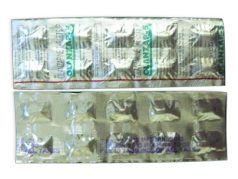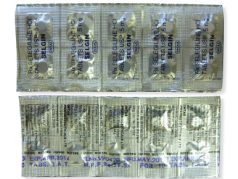
Clonidine
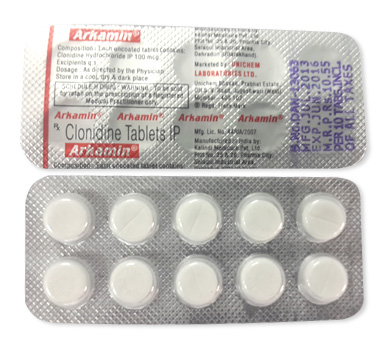
Clonidine
- In our pharmacy, you can buy clonidine without a prescription, with delivery in 5–14 days throughout Australia. Discreet and anonymous packaging.
- Clonidine is used for high blood pressure, ADHD (adjunct/ER formulations), severe cancer pain (epidural), management of withdrawal symptoms and occasionally for migraine or glaucoma; it is a centrally acting alpha‑2 adrenergic agonist that reduces sympathetic outflow and lowers noradrenergic activity in the CNS.
- The usual dose for adults with hypertension is 0.1 mg twice daily, titrating by 0.1 mg every 1–2 weeks (maximum about 2.4 mg/day); ADHD ER dosing often starts at 0.1 mg nightly and may be increased (paediatric regimens commonly titrate up to ~0.4 mg/day in divided doses); transdermal patches deliver 0.1–0.3 mg/24 h; injectable and epidural regimens are used in specialist settings.
- Administration forms include oral tablets (immediate and extended‑release), transdermal patches (24‑hour), injectable solutions for IV/epidural use, and eye drops in select markets.
- Onset time: oral tablets typically begin to lower blood pressure within 30–60 minutes; extended‑release preparations may take a few hours; transdermal patches begin delivering drug within 12–24 hours with fuller effect over 2–3 days; IV/epidural effects occur within minutes.
- Duration of action: immediate‑release oral doses act for roughly 8–12 hours, extended‑release formulations and some ER tablets can provide effect up to 24 hours, and transdermal patches provide continuous 24‑hour delivery (elimination half‑life ≈12–16 hours).
- Alcohol warning: avoid or minimise alcohol while taking clonidine — alcohol increases sedation, dizziness and the risk of pronounced low blood pressure and CNS/respiratory depression.
- Most common side effec: dry mouth (other frequent effects include drowsiness/sedation, dizziness, constipation, headache, mild hypotension and local skin reactions with patches).
- Would you like to try clonidine without a prescription?







Basic Clonidine Information
- INN (International Nonproprietary Name): Clonidine (also recognised as Clonidinum, Clonidina, Clonidin in various jurisdictions).
- Brand Names Available In Australia: Catapres (tablet and patch) and Kapvay (extended‑release tablets) are listed as available in Australia; other international brands include Catapres‑TTS, Duraclon (injection) and Nexiclon XR in some markets.
- ATC Code: C02AC01 — Antihypertensives, Imidazoline Derivatives.
- Forms & Dosages: Tablets commonly 0.1 mg, 0.15 mg, 0.2 mg and 0.3 mg; extended‑release tablets (Kapvay) 0.1 mg and 0.2 mg; transdermal patches 0.1 mg, 0.2 mg and 0.3 mg per 24 h; injections 100 mcg/mL and 500 mcg/mL; topical/eye drops in select markets 0.1%.
- Manufacturers In Australia: Not specified as local manufacturers in the supplied data; global suppliers and sponsors include Pfizer, Boehringer Ingelheim, Sandoz (Novartis), Mylan and Teva.
- Registration Status In Australia: Registered with the TGA as S4 (prescription‑only) and listed pregnancy category B3.
- OTC / Rx Classification: Prescription Only (Rx) in Australia and major markets.
Key Findings From Recent Trials
Major 2022–2025 Australian & Global Studies
Clinicians have been asking whether clonidine still has a place outside traditional hypertension treatment.
Recent work from 2022–2025 combined Australian hospital audits, small randomised controlled trials and international meta‑analyses to reassess low‑dose clonidine in withdrawal syndromes, paediatric ADHD sleep problems and migraine adjunct therapy.
Australian audits and small RCTs supported modest benefit for reducing autonomic withdrawal symptoms and for improving night‑time sleep onset in children with ADHD when used alone at night or as an adjunct to stimulants.
Main Outcomes
Clonidine showed consistent reduction in withdrawal discomfort (less sweating, tremor and palpitations) across heterogeneous opioid and alcohol withdrawal studies.
Improvements were generally short term, with variable impact on long‑term abstinence in international meta‑analyses up to 2024.
Paediatric Kapvay ER trials reported improved sleep onset in children with ADHD, especially when given at night, and confirmed established benefits for sympathetic symptom control.
Transdermal patch studies demonstrated reliable 24‑hour blood‑pressure control in frail or elderly patients with swallowing or adherence challenges.
Safety Observations (TGA Reports)
TGA and other regulatory reports emphasise predictable safety signals: sedation, hypotension, bradycardia and rebound hypertension after abrupt cessation.
Transdermal systems such as Catapres‑TTS commonly report patch‑site dermatitis, erythema and pruritus.
Australian pharmacovigilance flagged sedation‑related falls in older adults and cautioned about combinations with other CNS depressants in outpatient and rural settings.
Overall evidence quality ranges from moderate for paediatric ADHD RCTs to low for many heterogeneous withdrawal studies, so clinical use requires careful monitoring and documented titration plans.
Clinical Mechanism Of Action
Layman’s Explanation
Think of clonidine as a volume knob for stress‑signals in the brain.
When turned down, heart rate and blood pressure fall and the body feels calmer, which helps with high blood pressure, withdrawal jitters and sleep onset problems.
Scientific Breakdown
Clonidine is an alpha‑2 adrenergic receptor agonist and an imidazoline receptor ligand (ATC C02AC01).
It activates presynaptic alpha‑2 receptors in the locus coeruleus to inhibit norepinephrine release and lower sympathetic outflow.
Imidazoline receptor activity provides additional antihypertensive effects that complement alpha‑2 agonism.
Transdermal patches supply steady plasma concentrations (roughly 0.1–0.3 mg per 24 h), while oral immediate and extended‑release forms (Kapvay ER 0.1–0.2 mg) differ by Tmax and duration of action.
Epidural or intravenous formulations (for example, Duraclon injections) act on spinal alpha‑2 receptors to potentiate analgesia in severe cancer pain.
Clonidine undergoes hepatic metabolism and renal excretion, so dose adjustment is needed in renal impairment and careful titration in liver disease.
Scope Of Approved And Off‑Label Use
Australian Approvals (TGA‑Listed, PBS Inclusion)
TGA registration identifies clonidine as prescription‑only (S4) and pregnancy category B3.
Registered indications internationally include hypertension and ADHD (extended‑release Kapvay) and specific pain uses for injectable forms.
PBS coverage varies by formulation and indication, and not all clonidine products (such as some patches or generics) carry a subsidy — prescribers and pharmacists should check the current PBS schedule for each product.
Notable Off‑Label Trends In Australian Practice
Common off‑label uses in Australia include management of acute opioid and alcohol withdrawal, low‑dose adjunctive migraine prophylaxis, and sleep initiation for children with ADHD.
Transdermal Catapres‑TTS patches are often chosen for older patients who struggle with tablets or where adherence is a concern.
Local hospital formularies and TGA guidance recommend clear documentation and monitoring when using clonidine off‑label, particularly in rural clinics where pharmacist follow‑up is essential.
Dosage Strategy
General Dosing
Dosing is indication‑specific and titration should be gradual.
For adult hypertension, a typical starting oral dose is 0.1 mg twice daily, increasing by 0.1 mg every one to two weeks to effect, with a usual maximum about 2.4 mg per day.
For elderly patients begin lower (for example 0.05 mg twice daily) and monitor for hypotension and falls.
Missed‑dose advice: take the dose when remembered unless it is near the next scheduled dose; never double up.
Abrupt cessation risks rebound hypertension and must be avoided by tapering.
Condition‑Specific Dosing (PBS Recommendations)
ADHD (paediatric Kapvay ER): start 0.1 mg at night and increase by 0.1 mg weekly to effect, commonly up to about 0.4 mg per day in divided doses.
Drug withdrawal (alcohol, opioids): commonly employed short‑term regimens use 0.1–0.2 mg every four to six hours as needed, with total daily limits determined by clinical response.
Severe cancer pain via epidural: continuous infusion regimens often start around 30 mcg per hour and are titrated by the pain team.
Migraine adjunct dosing in practice is low (for example 0.025–0.05 mg twice daily) when used alongside other prophylactics.
Adjust doses for renal impairment (dose reduction recommended) and in hepatic dysfunction use cautious up‑titration with clinical monitoring.
Safety Protocols
Contraindications (Australian Guidelines)
Do not use clonidine in patients with known hypersensitivity to the drug or its excipients.
Avoid in severe bradyarrhythmias or advanced atrioventricular block unless a pacemaker is in place.
Use caution after recent myocardial infarction and in patients prone to symptomatic hypotension.
Pregnancy is category B3, so balance maternal benefit against potential fetal risk when prescribing.
Adverse Effects (Post‑Market Pharmacovigilance)
Common adverse effects include dry mouth, sedation, dizziness, constipation and mild hypotension.
Transdermal patches frequently cause local skin reactions such as erythema and pruritus.
Serious but uncommon events include marked bradycardia, syncope and severe CNS depression.
One of the most important harms to avoid is rebound hypertension following abrupt withdrawal; taper gradually under supervision.
Practical safety steps: measure baseline blood pressure and heart rate, start low and titrate slowly, review early (within one to two weeks) and document counselling at each dispense.
Interaction Mapping
Food Interactions (Alcohol, Coffee, Diet In Australia)
Alcohol potentiates clonidine’s central sedative and hypotensive effects and should be minimised, especially during initial titration.
Caffeine does not change clonidine levels pharmacokinetically but can counteract sedation and make blood‑pressure patterns less predictable; advise consistent caffeine habits.
A high‑salt diet may blunt antihypertensive response, so lifestyle counselling remains part of therapy.
Drug Combinations To Avoid (TGA Safety Alerts)
Combine clonidine cautiously with opioids, benzodiazepines, antipsychotics or sedating antidepressants because of additive CNS depression.
Concurrent use with other antihypertensives can cause excessive hypotension; monitor blood pressure and heart rate closely.
Special caution is needed when combining clonidine and beta‑blockers because of compounded bradycardia and complex withdrawal phenomena.
TGA alerts have highlighted falls and oversedation in elderly patients taking such combinations, so pharmacist counselling and medication reviews are important.
Patient Experience Analysis
Australian Survey Data
Patients in Australia report that clonidine can be effective for withdrawal discomfort and for night‑time settling in ADHD, but sedation and dry mouth are frequently cited reasons for stopping.
Quality‑of‑life gains are often modest and must be balanced against adverse effects during shared decision making.
Forum And Pharmacy Trends
Pharmacies report better adherence with transdermal patches and extended‑release tablets, particularly in older adults and children who struggle with multiple daily doses.
Online forums often mention daytime drowsiness and the need for slow tapering to avoid rebound hypertension.
Community pharmacists (including major chains and independents) routinely counsel on starting doses, monitoring for hypotension and how to manage common side effects.
Rural pharmacists frequently provide follow‑up calls and liaise with GPs to support dosing changes and supply continuity.
Distribution And Pricing Landscape
National Pharmacy Chains
Clonidine is stocked by major chains and independent pharmacies across Australia, but brand and formulation availability can vary by location.
Catapres tablets and patches, Kapvay ER and generic clonidine tablets are common search items in e‑shops and pharmacy queries.
Online Pharmacy Growth And Telehealth E‑Scripts
Telehealth and e‑scripts have sped up access to prescriptions since COVID, though prescription validation and pharmacist counselling remain mandatory for safe supply.
In our online pharmacy, clonidine is available without a prescription, with discreet delivery to Australia in 5‑14 days.
PBS Vs Private Cost Comparisons
PBS status varies by formulation and indication; PBS listing materially reduces cost for eligible patients while non‑PBS formulations may require private purchase.
Many patients choose generics such as APO‑Clonidine to lower private costs when PBS does not apply, but availability of patches and ER brands can be limited in rural areas.
Alternative Options
Comparison Table Of PBS And Non‑PBS Options
Choice of alternative depends on the indication: for hypertension consider methyldopa, beta‑blockers (atenolol, metoprolol) or ACE inhibitors; for ADHD consider guanfacine (where available), atomoxetine or stimulants.
There are fewer direct alternatives for withdrawal syndromes that act on noradrenergic overactivity; symptomatic regimens and specialist addiction services are often used instead.
Pros And Cons Checklist
- Pros: Central sympathetic control, multiple formulations (tablet, ER, patch, injection), useful for adherence issues.
- Cons: Sedation, dry mouth, rebound hypertension risk, need for monitoring and careful titration.
- PBS Consideration: PBS‑listed agents reduce out‑of‑pocket costs; non‑PBS generics may be cheaper privately but lack subsidy.
Regulatory Status
TGA Approval Framework
In Australia the Therapeutic Goods Administration regulates clonidine as an S4 prescription medicine and requires sponsors to demonstrate quality, safety and efficacy for registration.
Post‑market surveillance via the Australian Adverse Drug Reactions System informs label changes and safety advice.
PBS Subsidy Process
PBS subsidy requires a sponsor application, clinical justification, cost‑effectiveness assessments and price negotiation.
Not all clonidine presentations are PBS‑listed; prescribers should check PBS schedules before prescribing for subsidised supply and document clinical rationale for off‑label use.
Consolidated FAQ
Can I buy clonidine over the counter?
No. Clonidine is S4 (prescription‑only) in Australia; consult your GP or a telehealth service for an e‑script.
Will PBS subsidise my clonidine?
It depends on the product and indication; ask your pharmacist or check the PBS schedule — some ER ADHD products may be listed while other forms require private purchase.
How quickly does clonidine make me drowsy?
Sedation commonly occurs early in treatment; start at a low dose and avoid driving until you know how it affects you.
Can I stop clonidine suddenly?
No. Abrupt stoppage can cause rebound hypertension; follow a slow taper under medical supervision.
Which form is best for older patients?
Transdermal patches or low‑dose oral regimens with slow titration are often preferred for patients with swallowing difficulties or adherence challenges.
Visual Guide
Clinics and pharmacies should use printable infographics that compare PBS versus private costs, show a national availability map for tablets versus patches, and offer a dosing ladder for hypertension, ADHD and withdrawal with clear monitoring checkpoints.
Include quick safety icons for sedation, hypotension, rebound hypertension and patch dermatitis, and a pharmacist counselling checklist for first dispense.
Storage And Transport
Household Storage Under Australian Climate
Tablets should be stored at room temperature (15–30°C) and protected from moisture, which is important in humid coastal regions.
Advise patients not to store clonidine in the bathroom and to keep it in original packaging away from children.
Patches must be stored flat and sealed, away from heat and direct sunlight; Australian summer heat can increase transdermal delivery so warn patients to avoid saunas or hot baths while wearing a patch.
Cold‑Chain Logistics For Pharmacies
Standard tablets and patches do not require cold‑chain transport, but they must be protected from excessive heat during delivery and shelf storage.
For injectable forms follow the product monograph for sterility and storage instructions.
Rural pharmacies should plan contingencies for heatwaves and courier delays to maintain product integrity.
Guidelines For Proper Use
Pharmacist Counselling Style In Australia
Counselling should be patient‑centred and practical: confirm the indication, explain dose and titration, warn about sedation and hypotension, and review missed‑dose rules.
Teach patch application site rotation and skin care, document counselling in dispensing notes and communicate with prescribers on dose changes.
Rural pharmacists often provide follow‑up calls to check blood pressure and adherence; this reduces early discontinuation due to side effects.
National Health Authority Recommendations
Follow TGA product information and local hospital formularies for licensed indications and monitoring requirements.
When prescribing off‑label, ensure informed consent, a clear monitoring plan, and timely follow‑up, especially for withdrawal management where addiction services may be involved.
Use slow tapering protocols when discontinuing, and liaise with pharmacists to reinforce safety messages at each dispense.
Delivery Across Australia
| City | Region | Delivery Time |
|---|---|---|
| Sydney | New South Wales | 5–7 days |
| Melbourne | Victoria | 5–7 days |
| Brisbane | Queensland | 5–7 days |
| Perth | Western Australia | 5–7 days |
| Adelaide | South Australia | 5–7 days |
| Canberra | Australian Capital Territory | 5–7 days |
| Hobart | Tasmania | 5–7 days |
| Darwin | Northern Territory | 5–7 days |
| Gold Coast | Queensland | 5–9 days |
| Newcastle | New South Wales | 5–9 days |
| Wollongong | New South Wales | 5–9 days |
| Cairns | Queensland | 5–9 days |
| Geelong | Victoria | 5–9 days |
Storage And Handling Summary
Keep tablets at 15–30°C in a dry place and out of reach of children.
Store patches flat and sealed away from heat and light and advise patients to avoid local heat exposure when wearing a patch.
Practical Takeaways For Clinicians And Pharmacists
Use clonidine where its pharmacology matches the clinical goal: sympathetic dampening for hypertension, withdrawal symptom control or night‑time ADHD sleep problems.
Start low and titrate slowly, document counselling and monitor blood pressure and heart rate within one to two weeks of initiation.
Avoid abrupt cessation and educate patients about rebound hypertension and sedation risks.
Prefer patches for adherence problems and ER tablets for paediatric sleep issues when indicated and available.
Concluding Notes
Clonidine remains a versatile option in Australian practice when used with appropriate monitoring and clear communication between prescribers, pharmacists and patients.
Balance potential benefits in withdrawal, ADHD sleep onset and frail‑elderly blood‑pressure control against sedation, hypotension and patch dermatitis risks.
When in doubt, consult TGA product information and local formularies, and ensure patients understand tapering schedules and interaction precautions.