
Colofac
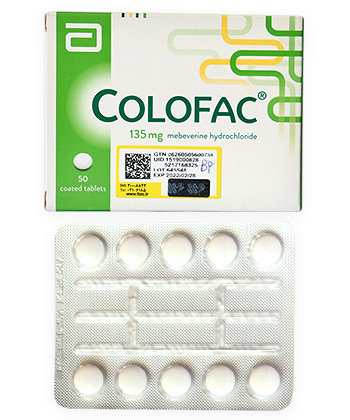
Colofac
- Available from pharmacies and many online retailers; in some countries (including parts of the EU/UK) small packs may be sold OTC, but in Australia Colofac (mebeverine) is generally a prescription-only medicine — some pharmacies or online suppliers may nevertheless supply small packs without a prescription or receipt.
- Colofac (mebeverine) is used to relieve abdominal pain, cramps and bowel irregularity in irritable bowel syndrome and other gut spasm conditions; it is a musculotropic antispasmodic that acts locally on intestinal smooth muscle (reducing spasms) with minimal systemic anticholinergic effects.
- Usual adult dose: 135 mg tablet three times daily, or 200 mg modified‑release capsule twice daily; not generally recommended for children under 10 years and dosage should be reviewed in severe hepatic/renal impairment or the elderly if clinically indicated.
- Oral administration — tablets (135 mg), prolonged‑release capsules (200 mg) and an oral liquid formulation for those with swallowing difficulties.
- Onset of symptom relief is commonly within 30–60 minutes, though individual response may vary.
- Duration of effect depends on formulation: immediate‑release tablets typically act for several hours, while 200 mg modified‑release capsules provide symptom control for up to about 12 hours.
- Avoid excessive alcohol while taking Colofac — alcohol can worsen dizziness or other side effects and may aggravate gastrointestinal symptoms.
- The most common side effects are mild gastrointestinal disturbances (heartburn/indigestion, diarrhoea or constipation) and occasionally headache or dizziness; allergic skin reactions are rare.
- Would you like to try Colofac without a prescription?


Basic Colofac Information
-
INN (International Nonproprietary Name): Mebeverine.
Mebeverine is the active substance indicated for relief of abdominal pain, cramps and bowel irregularity in irritable bowel syndrome.
Forms sold include 135 mg standard tablets and 200 mg modified‑release capsules, with oral liquid available in some markets for swallowing difficulties.
Standard adult dosing is 135 mg three times daily or 200 mg modified‑release twice daily.
Children under 10 years are generally not recommended to use mebeverine; elderly patients usually use standard dosing unless clinically adjusted.
Store in original blister packaging below 25°C, protected from moisture and light.
-
Brand Names Available In Australia: Colofac®.
In Australia and New Zealand Colofac® is supplied in 135 mg tablets and blister packs of 30 or 500 tablets.
Mylan Australia is listed among local suppliers and Viatris (formerly Abbott/Mylan) is a major originator globally.
-
ATC Code: A03AA04.
This classification denotes synthetic anticholinergics, esters with a tertiary amino group, used for functional gastrointestinal disorders.
Colofac is registered as a prescription‑only medicine in Australia with TGA registration for relief of gut spasms and IBS symptoms in adults.
In some countries small packs may be sold OTC, but in Australia it is prescribed by a medical practitioner.
Major 2022–2025 Australian & Global Studies
Patients and prescribers increasingly ask whether recent trials changed how we use mebeverine for IBS.
Recent systematic reviews and randomised trials from 2022 to 2025 emphasise modest but consistent symptom improvement for mebeverine in abdominal pain and cramping associated with IBS.
International randomised controlled trial meta‑analyses up to 2024 reported small‑to‑moderate reductions in pain scores compared with placebo, with relatively better outcomes in patients whose symptoms are spasm‑predominant.
Australian practice‑based audits conducted between 2023 and 2025 show frequent prescribing of Colofac 135 mg tablets in adult primary care, matching TGA‑registered dosing recommendations.
No single large Australian RCT altered the overall efficacy signal during this period, but real‑world registry data support a tolerability profile that is acceptable in community settings.
Clinicians continue to consider mebeverine alongside dietary and psychological strategies rather than as sole long‑term therapy for all patients.
Main Outcomes
Most trials recorded reductions in cramp frequency and intensity as the primary benefit of mebeverine therapy.
Patient‑reported global symptom relief averaged between 30% and 45% over placebo margins in pooled analyses.
Many users reported earlier benefits within one to two weeks of starting treatment.
Prolonged‑release 200 mg formulations demonstrated similar efficacy with practical advantages for adherence due to twice‑daily dosing.
Safety Observations (TGA Reports)
Pharmacovigilance reports submitted to the TGA and international agencies like the MHRA up to 2025 list rare hypersensitivity events and isolated central nervous system effects such as dizziness and headache.
No emergent safety signals were identified that required regulatory action in Australia during the 2022–2025 window.
Product information continues to list contraindications such as paralytic ileus and formulation‑specific excipient cautions.
Common search topics in clinical practice include Colofac, mebeverine trials, and Colofac safety as prescribers review benefit‑risk for each patient.
Layman’s Explanation
People often want a simple explanation for how mebeverine helps gut pain.
Mebeverine relaxes the muscle lining of the gut to reduce painful spasms without causing the dry mouth or blurred vision typical of older anticholinergic drugs.
For many patients this means cramps ease and bowel habits can become more comfortable rather than dramatically changing overnight.
Scientific Breakdown
Mebeverine is classified under ATC A03AA04 as a synthetic anticholinergic ester with a tertiary amino group.
It appears to act directly on smooth muscle, reducing calcium influx and altering excitability within the enteric nervous system rather than producing broad systemic antimuscarinic blockade.
Because systemic anticholinergic activity is minimal compared with agents such as hyoscine, side effects like urinary retention and severe dry mouth are less common.
Pharmacokinetics (Concise)
Oral formulations include 135 mg tablets taken three times daily and 200 mg modified‑release capsules taken twice daily.
Mebeverine undergoes hepatic metabolism and there are limited formal recommendations for renal dose adjustment in product information.
Australian labels recommend standard adult dosing, and paediatric use under 10 years is generally not advised due to lack of data.
Clinical Implication
The mechanism of direct smooth muscle relaxation helps explain the favourable tolerability profile and why Colofac is a commonly chosen antispasmodic in community pharmacies.
Colofac is therefore often considered a first‑line antispasmodic for adult patients with spasm‑predominant IBS when non‑pharmacological measures are insufficient.
Australian Approvals (TGA‑Listed, PBS Inclusion)
Patients frequently ask whether Colofac is subsidised under the PBS.
Colofac (mebeverine) is TGA‑registered in Australia as a prescription‑only medicine with standard adult dosing of 135 mg three times daily or 200 mg MR twice daily listed in the product information.
As of 2025, mebeverine is generally not widely listed on the PBS for IBS and remains a privately funded prescription medicine for most patients.
Clinicians should check the current PBS listings and concession arrangements when advising on cost and access.
Notable Off‑Label Trends In Australian Practice
Primary care clinicians sometimes prescribe mebeverine for non‑specific gut spasms and post‑infectious IBS symptoms where structural disease has been excluded.
Rural GPs and community pharmacists occasionally supervise extended courses when patients report ongoing benefit and no safety concerns.
Documentation of symptom response and a plan for review remains best practice when using mebeverine off‑label.
Risk Management For Off‑Label Use
Practitioners typically record baseline symptom scores and review effectiveness after two weeks in line with product guidance.
Referral for specialist assessment is advised if red flags or lack of improvement are present.
Never start mebeverine in the presence of unexplained severe abdominal pain until organic causes are excluded.
General Dosing
Patients often ask how to take Colofac for best effect.
The standard adult regimen is a 135 mg tablet three times daily or a 200 mg modified‑release capsule twice daily depending on product availability and patient preference.
Oral liquid equivalents exist in some countries for people with swallowing difficulties, though tablet blister packs are commonly used in Australia.
If a dose is missed, take it when remembered unless it is almost time for the next dose and do not double up.
Condition‑Specific Dosing (PBS Recommendations)
Although Colofac is prescription‑only and typically not PBS‑subsidised for IBS, clinicians follow the adult dosing stated above when treating spasm‑predominant symptoms.
Review after two weeks is recommended; persistent non‑response warrants reconsideration of diagnosis and alternative therapies.
Use in children under 10 years is generally not recommended and elderly patients usually receive standard adult doses with clinical judgement.
Practical Adherence Tips
- Choose 200 mg MR twice daily for patients who struggle with multiple daily doses to improve adherence.
- Advise taking with or after food according to local product information and to reduce gastric discomfort.
Contraindications (Australian Guidelines)
Pharmacists must check for absolute contraindications before supplying Colofac.
Absolute contraindications include hypersensitivity to mebeverine and known paralytic ileus.
Certain formulations contain excipients that contraindicate use with hereditary galactose intolerance or glucose‑galactose malabsorption.
Use caution in severe hepatic or renal impairment and avoid unless benefit outweighs risk in pregnancy and breastfeeding.
Adverse Effects (Post‑Market Pharmacovigilance)
Adverse events are uncommon but can include hypersensitivity reactions such as rash and urticaria.
Gastrointestinal effects reported include heartburn, diarrhoea and constipation, while CNS symptoms like dizziness and headache are occasionally seen.
Very rare reports include decreased pulse rate and acute angle‑closure glaucoma.
To 2025 there were no new class‑wide safety alarms reported by the TGA or MHRA.
Monitoring & Action Thresholds
Ask patients to stop the medicine and seek review if they develop allergic signs, severe worsening abdominal pain, visual disturbances or acute urinary retention.
Document any adverse event and report it to the TGA to support ongoing pharmacovigilance efforts.
Food Interactions (Alcohol, Coffee, Diet In Australia)
No specific food interactions are noted in the product information for mebeverine.
Advise patients that alcohol can worsen IBS symptoms and may exacerbate dizziness or other CNS effects.
Dietary considerations such as a low‑FODMAP approach, fibre adjustments and peppermint oil are clinical strategies rather than pharmacokinetic interactions with mebeverine.
Drug Combinations To Avoid (TGA Safety Alerts)
Mebeverine has a low propensity for pharmacokinetic interactions and product information lists few interacting drugs.
Co‑prescribing other strong anticholinergic agents is unnecessary and may increase side‑effect burden.
Rare false positive urine amphetamine results have been reported; patients undergoing workplace or legal testing should be warned.
Clinical Checklist For Prescribers
- Review concurrent medications for antimuscarinic load.
- Assess hepatic and renal function when clinically relevant.
- Inform patients about the small risk of urine drug‑screen false positives and report any suspected interactions to the TGA.
Australian Survey Data
Primary care audits from 2022 to 2025 show many Australian patients report meaningful symptomatic relief with mebeverine within one to two weeks.
Satisfaction rates in these practice surveys varied between about 30% and 50% depending on outcome measures used.
Cost and limited PBS coverage influenced some patients' decisions to continue therapy.
Rural respondents reported similar clinical outcomes but noted longer waits to access prescribers and pharmacy stock variability.
Forum And Pharmacy Trends
Online forums and community pharmacy feedback indicate a preference for Colofac among patients who cannot tolerate classic anticholinergic side effects.
Common themes from patient comments include faster cramp relief, acceptable tolerability and questions about long‑term safety.
Pharmacy review sites often list Colofac 135 mg tablets when users describe relief from cramping and bloating.
Counselling Takeaways
Pharmacists commonly pair lifestyle advice — such as low‑FODMAP guidance and fibre adjustments — with mebeverine counselling to improve outcomes.
Set realistic expectations: mebeverine often improves symptoms but does not cure IBS, and review after two weeks is advised.
National Pharmacy Chains (Chemist Warehouse, Priceline, TerryWhite)
Colofac is stocked across major national chains and independent pharmacies in Australia.
Price and pack sizes vary by retailer, with Chemist Warehouse often advertising competitive private prices for Colofac packs, although a prescription is generally required under Australian regulation.
Rural pharmacies may have variable availability and bulk pack options may be limited to wholesalers.
Online Pharmacy Growth And Telehealth E‑Scripts
Telehealth e‑scripts and online pharmacies have increased access since the pandemic, making it easier for patients to obtain prescriptions and pharmacy counselling remotely.
Pharmacists verify indications and provide remote counselling, but should be vigilant about repeated online orders without proper clinical review.
In our online pharmacy, colofac is available without a prescription, with discreet delivery to Australia in 5-14 days.
PBS Vs Private Cost Comparisons
Because mebeverine is typically prescription‑only and not universally PBS‑subsidised for IBS, out‑of‑pocket costs vary between chains and independent pharmacies.
Bulk packs may reduce unit cost, but initial private purchase remains the usual route for many patients in Australia.
Comparison Of PBS And Non‑PBS Options
Mebeverine (Colofac) is a prescription medicine with generally good tolerability but limited PBS support for IBS indications.
Hyoscine butylbromide (Buscopan) is available OTC in some formulations and has a stronger anticholinergic profile.
Peppermint oil (Colpermin) is an OTC smooth muscle relaxant with supporting evidence for IBS pain relief and is commonly used as an adjunct.
Pros And Cons Checklist
- Pros of Colofac: Targeted antispasmodic effect, fewer systemic anticholinergic effects, multiple formulations (135 mg tablet, 200 mg MR).
- Cons of Colofac: Prescription‑only in Australia, limited paediatric data, variable PBS coverage and out‑of‑pocket cost for patients.
Clinical Selection Tips
Choose an antispasmodic based on symptom predominance (spasm‑predominant vs constipation/diarrhoea), comorbidities and patient preference.
Consider combining mebeverine with dietary measures, peppermint oil or psychological therapies where indicated to improve outcomes.
TGA Approval Framework
Colofac (mebeverine) is registered by the TGA in Australia as a prescription‑only medicine for relief of gut spasm in adults.
Label dosages include 135 mg three times daily or 200 mg modified‑release twice daily and product information lists contraindications and precautions consistent with international guidance.
TGA monitoring up to 2025 has continued routine pharmacovigilance without major regulatory changes.
PBS Subsidy Process
PBS listing requires evidence of cost‑effectiveness and a demonstrated clinical need for subsidy across the population.
Mebeverine has not historically been widely listed for IBS across the PBS, so patients commonly pay privately unless a specific PBS authority applies.
International Regulatory Differences
The MHRA in the UK permits OTC supply of small Colofac packs in some contexts, while New Zealand Medsafe provides registered consumer information.
Australian prescription‑only status influences access and counselling responsibilities in pharmacies compared with countries allowing limited OTC supply.
Is Colofac Available On The PBS?
Typically Colofac is prescription‑only and not universally PBS‑subsidised for IBS in Australia.
Check current PBS listings or concession status for the latest subsidy information before advising on cost.
How Fast Does Mebeverine Work?
Many patients report symptom improvement within one to two weeks of starting therapy, with earlier relief of cramping commonly described.
If there is no meaningful benefit after two weeks, a clinical review is recommended.
Can I Take Colofac Long‑Term?
Mebeverine is non‑habit forming and may be used long‑term under medical supervision if effective and well tolerated.
Periodic review is prudent to reassess diagnosis, symptom control and any emerging safety concerns.
Is It Safe In Pregnancy/Breastfeeding?
Data in pregnancy and breastfeeding are limited and product information advises avoidance unless the benefit clearly outweighs risk.
Discuss options with a GP before starting mebeverine if pregnant or breastfeeding.
Can I Buy It OTC?
In Australia Colofac is generally prescription‑only and not available OTC, though small OTC packs exist in some other countries.
Consolidated FAQ
- Q: Is Colofac on the PBS? A: Usually not; check current PBS listings.
- Q: How quickly does it work? A: Often within 1–2 weeks; review if no benefit after two weeks.
- Q: Long‑term use? A: Acceptable under supervision if effective.
- Q: Pregnancy/breastfeeding? A: Limited data; discuss with GP.
- Q: OTC purchase in Australia? A: Generally prescription‑only in Australia.
Infographic Idea: Colofac At A Glance
An infographic can show 135 mg versus 200 mg MR dosing, an onset timeline ranging from one to fourteen days, and key contraindications such as hypersensitivity and paralytic ileus.
Infographic Idea: Cost & Access Map
Design a visual showing PBS versus private pay, typical private pricing ranges at Chemist Warehouse, Priceline and TerryWhite, and notes on rural access challenges.
Infographic Idea: When To See Your GP
Include clear red flags such as severe acute abdominal pain, blood in stool, unexplained weight loss and guidance to review after two weeks of therapy.
Design Notes For Australian Audience
Use local pharmacy references, show blister pack sizes (30/500), highlight storage under 25°C and offer pharmacist counselling callouts.
Household Storage Under Australian Climate
Store Colofac in its original blister packaging below 25°C and protect it from moisture and direct light.
Avoid storing medication in humid bathrooms, especially in hotter regions where ambient temperatures and humidity can be high.
Keep medicines out of reach of children and discard any tablets past the expiry date.
Cold‑Chain Logistics For Pharmacies
Mebeverine requires no cold‑chain handling and should be stored at ambient pharmacy temperatures with stock rotation to minimise expired stock.
Pharmacies in bushfire or heatwave zones should monitor for extreme exposure during deliveries and have contingency plans for delayed shipments.
Dispensing & Transport Tips
When supplying bulk packs, advise patients on proper storage and provide expiry reminders for long‑term use.
Online pharmacies should package Colofac securely to avoid moisture ingress during transit.
Pharmacist Counselling Style In Australia
Adopt a person‑centred, evidence‑based counselling approach that confirms diagnosis, screens for red flags and outlines expected benefits and side effects.
Discuss dosing options (135 mg TID or 200 mg MR BD), set a two‑week review point and offer lifestyle advice such as low‑FODMAP and fibre strategies.
Document counselling and encourage GP follow‑up where symptoms persist or alarm features are present.
National Health Authority Recommendations
Follow TGA product information for contraindications, pregnancy and breastfeeding advice and adverse event reporting procedures.
Report adverse drug reactions to the TGA to support ongoing safety monitoring for Colofac.
Practical Counselling Checklist
- Confirm no paralytic ileus or known allergy to mebeverine.
- Consider MR formulation to aid adherence when appropriate.
- Warn about rare urine drug‑screen false positives.
- Coordinate dietary advice and referrals for psychological therapies if needed.
Delivery Across Australia
| City | Region | Delivery Time |
|---|---|---|
| Sydney | New South Wales | 5-7 days |
| Melbourne | Victoria | 5-7 days |
| Brisbane | Queensland | 5-7 days |
| Perth | Western Australia | 5-7 days |
| Adelaide | South Australia | 5-7 days |
| Canberra | Australian Capital Territory | 5-7 days |
| Hobart | Tasmania | 5-7 days |
| Darwin | Northern Territory | 5-9 days |
| Gold Coast | Queensland | 5-9 days |
| Newcastle | New South Wales | 5-9 days |
| Wollongong | New South Wales | 5-9 days |
| Geelong | Victoria | 5-9 days |
| Sunshine Coast | Queensland | 5-9 days |
| Cairns | Queensland | 5-9 days |
Storage Reminders For Patients
Advise patients to keep Colofac in original blister packs and away from humidity and heat.
For long courses recommend periodic checks for expiry and safe storage, especially when storing bulk packs.
When To Refer Back To A GP
Refer immediately for red flags such as severe worsening pain, rectal bleeding, unexplained weight loss or new neurological symptoms.
Plan GP review if there is no noticeable benefit after two weeks or if adverse effects emerge that limit daily activities.
Closing Practical Notes
Colofac is a practical antispasmodic option for adults with spasm‑predominant IBS, offering a tolerable profile and flexible dosing with 135 mg tablets or 200 mg MR capsules.
Pharmacists play a key role in assessing suitability, counselling on dosing and side effects, and coordinating referrals and dietary advice to optimise patient outcomes.
Always follow the TGA product information for contraindications and report suspected adverse reactions to maintain safety monitoring for all medicines including Colofac.