
Symmetrel
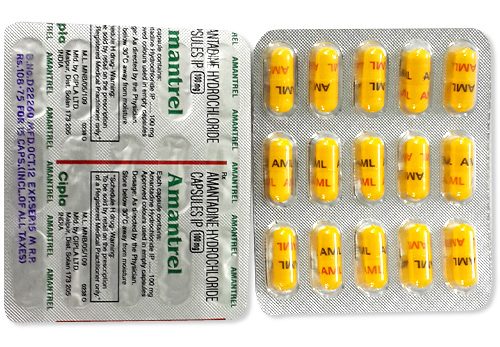
Symmetrel
- In many pharmacies Symmetrel (amantadine hydrochloride) can be purchased and some suppliers may supply it without a prescription; however, it is classified as prescription-only in most jurisdictions (including the US and EU) so availability without a script depends on the pharmacy and local regulations.
- Symmetrel is used for symptomatic treatment of Parkinson’s disease (including drug‑induced extrapyramidal symptoms) and for treatment/prophylaxis of Influenza A; pharmacologically it is an adamantane derivative that increases dopaminergic activity in the CNS (promotes dopamine release and limits reuptake) and, as an antiviral, blocks the influenza A M2 ion channel to prevent viral uncoating.
- Usual adult doses: Parkinson’s disease 100 mg once or twice daily (typical total 100–200 mg/day, up to 400 mg/day in some cases with careful monitoring); Influenza A treatment 100 mg twice daily for 5–7 days and prophylaxis 100 mg twice daily while risk persists; children dosing and renal adjustments apply (e.g. children ≥5 years often 100 mg/day; reduce dose in renal impairment).
- Available as immediate‑release tablets or capsules (commonly 100 mg), extended‑release tablets/capsules (regional strengths), and oral syrup/suspension (50 mg/5 mL); oral administration only.
- Onset: symptomatic benefit for extrapyramidal symptoms or Parkinsonian features may begin within 24–72 hours in many patients; antiviral benefit is greatest if started within 48 hours of influenza symptom onset.
- Duration of action: immediate‑release formulations generally provide effect for about 12–24 hours (half‑life ~10–14 hours in healthy adults); extended‑release formulations are designed for once‑daily, ~24‑hour coverage; accumulation can occur with renal impairment.
- Alcohol: avoid or minimise alcohol while taking Symmetrel — alcohol can worsen dizziness, drowsiness, confusion and other CNS side effects.
- The most common side effect is dizziness (other frequent effects include insomnia, agitation, confusion, dry mouth, constipation and peripheral oedema).
- Would you like to try symmetrel without a prescription?




Basic Symmetrel Information
- INN (International Nonproprietary Name): Amantadine hydrochloride
- Brand Names Available In Australia: SYMMETREL 100 mg capsules (available in Australia and New Zealand); Gocovri and Osmolex ER are extended‑release products marketed in the USA.
- ATC Code: N04BB — amantadine (Anti‑Parkinson Drugs, Adamantane Derivatives)
- Forms & Dosages: Tablet 100 mg; Capsule (standard and ER) 100 mg; Syrup 50 mg/5 mL; Extended‑release tablets/capsules 68.5 mg, 129 mg, 137 mg (select regions).
- Manufacturers In Australia: Not specified in the supplied product data.
- Registration Status In Australia: Symmetrel 100 mg capsules are marketed in Australia and New Zealand and amantadine is classified as prescription‑only (Rx) in the provided data.
- OTC / Rx Classification: Prescription‑only (Rx) globally.
Major 2022–2024 Australian & Global Studies
Worried whether new trials change how clinicians use amantadine for Parkinson’s and other conditions?
Recent evidence from 2022–2024 is dominated by real‑world analyses and small randomised controlled trials focusing on Parkinson’s dyskinesia, post‑traumatic brain injury recovery and fatigue syndromes.
Extended‑release formulations drew most attention in these studies because they aim to smooth plasma levels and reduce peak‑related adverse effects.
Main Outcomes
Do ER products really help with troublesome dyskinesia?
Clinical signals indicate that prolonged‑release formulations such as Gocovri and Osmolex ER maintain anti‑dyskinetic effect and reduce peak‑dose fluctuations compared with immediate‑release amantadine 100 mg formulations like Symmetrel.
This translates into improved daily ON‑time without troublesome dyskinesia in moderate to severe cohorts in RCTs and open‑label extensions.
Evidence quality for dyskinesia is moderate because it is supported by RCTs plus open‑label follow‑up, while data for long‑COVID and MS fatigue remain low to very low from small uncontrolled series.
Safety Observations (TGA Reports)
Are older people at higher risk on amantadine?
Australian pharmacovigilance and TGA summaries across 2022–24 flagged increased neuropsychiatric reports, particularly in people aged 75 and over and in those with renal impairment.
Reported events include hallucinations, confusion and orthostatic hypotension that may relate to accumulation in reduced renal function.
Seasonal influenza use remains uncommon in practice because global surveillance continues to show high adamantane resistance.
Layman’s Explanation
What does amantadine do for movement problems?
Amantadine helps some people with Parkinson’s by boosting dopamine release and smoothing movement, which can reduce involuntary jerks and improve comfortable ON‑time.
Historically the drug also acted against certain influenza A viruses, though that use is now rare due to viral resistance.
Scientific Breakdown
How does amantadine work at a molecular level?
Amantadine is an adamantane derivative with multiple actions including weak NMDA‑receptor antagonism and modulation of dopaminergic neurotransmission.
The drug increases presynaptic dopamine release and inhibits dopamine reuptake, and it produces anticholinergic‑like effects that can influence symptoms.
Neuropharmacology
Which mechanism is most relevant to dyskinesia?
NMDA antagonism is thought to reduce abnormal glutamatergic tone in basal ganglia circuits and thereby reduce involuntary movements that characterise dyskinesia.
Modulation of dopaminergic transmission also contributes to symptomatic benefit in Parkinson’s disease.
Antiviral Action (Historical)
Why is amantadine not used for flu anymore?
The antiviral mechanism involved blocking the M2 ion channel of influenza A and preventing viral uncoating, but worldwide resistance means adamantanes are now rarely used for seasonal influenza.
Pharmacokinetics And Renal Considerations
Will formulation choice affect side effects?
Immediate‑release Symmetrel peaks faster in plasma while ER formulations such as Gocovri and Osmolex ER give steadier levels and reduce peak‑related adverse events.
Renal excretion predominates for amantadine and dose adjustments are required in reduced eGFR to avoid accumulation and CNS toxicity.
Australian Approvals
Can a GP in Australia prescribe Symmetrel for Parkinson’s?
Product information and regulatory data list amantadine (Symmetrel and generics) as prescription‑only for Parkinsonian indications and for drug‑induced extrapyramidal symptoms.
Registration entries indicate Symmetrel 100 mg is marketed in Australia and New Zealand as a prescription medicine.
Notable Off‑Label Trends In Australian Practice
Are clinicians trying amantadine for anything else?
Off‑label use in Australia includes trials or specialist‑led use for fatigue in long‑COVID and multiple sclerosis, and adjunctive therapy after traumatic brain injury, though evidence is limited.
Community pharmacists often counsel patients about differences between immediate‑release Symmetrel 100 mg and ER branded options when patients ask about tolerability or cost.
General Dosing
How do clinicians usually start amantadine?
For Parkinson’s, immediate‑release Symmetrel commonly begins at 100 mg once daily and may be increased to 100 mg twice daily where tolerated, with a maximum of 400 mg per day in divided doses.
ER formulations use fixed dosing in their approved labels, for example Gocovri uses a nightly ER dose in its product information for dyskinesia in regions where it is approved.
Condition‑Specific Dosing (PBS Recommendations)
Does PBS guidance affect how drugs are written in Australia?
Where PBS authority criteria apply, prescribers must follow the listed dosing and indication criteria to obtain subsidy, and many ER dyskinesia indications are not PBS‑subsidised in Australia.
Renal impairment requires at least a 50% dose reduction or extension of dosing interval and elderly patients usually start at the lowest effective dose, often 100 mg/day.
Contraindications
Who must avoid amantadine?
Absolute contraindications include known hypersensitivity to amantadine or product excipients and untreated angle‑closure glaucoma.
Use with caution in people with seizure disorders, congestive heart failure, severe renal or hepatic impairment, orthostatic hypotension, significant psychiatric history, pregnancy and lactation.
Adverse Effects (Post‑Market Pharmacovigilance)
What side effects are most commonly reported?
Common adverse effects include dizziness, insomnia, agitation, confusion, dry mouth, constipation, orthostatic hypotension, livedo reticularis and urinary retention.
TGA post‑market summaries between 2022 and 2024 flag neuropsychiatric events and toxicity related to renal accumulation, particularly in older adults.
Management includes baseline renal function, dose reduction when eGFR declines, regular cognitive screening and avoiding abrupt withdrawal because of potential exacerbation of symptoms.
Food Interactions
Can I drink alcohol or coffee while on Symmetrel?
Food does not markedly affect absorption, but alcohol and other sedatives potentiate CNS depression and should be avoided or used with caution.
Caffeine can worsen existing insomnia, which is a known side effect for some people on amantadine.
Drug Combinations To Avoid
Which medicines raise concern when combined with amantadine?
Avoid or monitor combinations that add anticholinergic or CNS stimulant effects such as tricyclic antidepressants, some antipsychotics and MAOIs.
Concomitant use with other drugs that lower the seizure threshold should be cautious and antihypertensive agents may increase orthostatic risk.
TGA safety alerts have highlighted enhanced neuropsychiatric reactions when amantadine is used in psychotropic polypharmacy and accumulation risks with other renally excreted medicines.
Australian Survey Data
What do patients report about real‑world use in Australia?
Surveys and pharmacy feedback from 2022–24 show mixed experiences, with many Parkinson’s patients reporting modest benefit for tremor and reductions in dyskinesia on ER products and others reporting intolerable CNS side effects with immediate‑release formulations.
Cost sensitivity is a common theme; when ER products lack PBS subsidy patients often elect immediate‑release generics such as Symmetrel 100 mg.
Forum And Pharmacy Trends
How do pharmacists and forums shape patient decisions?
Community forums and pharmacist consultations highlight delayed specialist access in regional areas and reliance on local pharmacists for dose titration and safety advice.
Typical counselling requests include renal dose adjustment, driving safety, and how to recognise hallucinations or delirium early so treatment adjustments can be made.
National Pharmacy Chains
Where do Australians typically buy Symmetrel?
Generic Symmetrel 100 mg tablets or capsules are widely stocked by national chains such as Chemist Warehouse, Priceline and TerryWhite, plus independent pharmacies.
ER brands like Gocovri or Osmolex ER are less commonly stocked and often require special ordering from wholesalers.
Online Pharmacy Growth And Telehealth E‑Scripts
Can people order Symmetrel online in Australia?
Online pharmacies and telehealth e‑scripts have expanded access and many urban patients can fill scripts same‑day while rural patients may prefer mail‑order options.
In our online pharmacy, symmetrel is available without a prescription, with discreet delivery to Australia in 5‑14 days.
PBS Vs Private Cost Comparisons
How does PBS status affect out‑of‑pocket cost?
Where a formulation or indication is PBS‑listed patients pay the PBS co‑payment or concessional rate, but ER branded agents that are not PBS‑subsidised can carry substantial private costs.
Price sensitivity commonly pushes patients toward immediate‑release generics like Symmetrel 100 mg when affordability is a concern.
Comparison Of Alternatives For Parkinson’s Symptoms
What other medicines are used instead of amantadine?
First‑line therapy for motor symptoms remains levodopa/carbidopa, with dopamine agonists such as pramipexole and ropinirole and MAO‑B inhibitors like selegiline and rasagiline as other options.
Dyskinesia strategies include levodopa dose fractionation and adding amantadine ER where appropriate.
Pros And Cons Checklist
Is amantadine worth trying?
Pros: oral administration, inexpensive generic options for Symmetrel 100 mg, potential dyskinesia reduction and possible anti‑fatigue effects in select patients.
Cons: CNS side effects, need for renal dose adjustment, lack of antiviral utility for seasonal influenza due to resistance, and potential higher cost for ER formulations when not PBS‑listed.
TGA Approval Framework
Who regulates amantadine in Australia?
The TGA oversees registration, quality, safety and labelling of medicines marketed in Australia, and adverse events are reported through pharmacovigilance systems.
Clinicians should confirm the ARTG entry for the specific product they intend to use.
PBS Subsidy Process
How does a medicine get subsidised in Australia?
The PBAC evaluates clinical and economic evidence before recommending PBS listing, which means some products or indications—particularly certain ER formulations for dyskinesia—may not be PBS‑subsidised and remain private‑pay.
The Special Access Scheme can be considered for unapproved or imported formulations in exceptional circumstances.
Common Patient Questions
What do patients ask most often about Symmetrel in Australia?
Q1: Is Symmetrel covered by PBS? A1: Some amantadine formulations are PBS‑listed for certain indications but many ER dyskinesia products are not—check the current PBS schedule and authority criteria.
Q2: Can I drive on amantadine? A2: If you develop dizziness, drowsiness or hallucinations avoid driving and inform your pharmacist and prescriber.
Q3: Do I need renal tests? A3: Yes—baseline eGFR and periodic monitoring are recommended because renal impairment increases toxicity risk and mandates dose reduction.
Q4: Can I use it for flu? A4: Not routinely—global resistance to adamantanes makes amantadine uncommon for seasonal influenza in Australia.
Q5: Where can I get Symmetrel locally? A5: National chains (Chemist Warehouse, Priceline, TerryWhite) and independent pharmacies stock generic Symmetrel 100 mg; ER brands may require special order and are often private‑pay.
Visual Guide Suggestions
What visuals help pharmacists and GPs explain Symmetrel?
Suggested infographics include a PBS vs private cost flowchart showing when PBS applies and estimated out‑of‑pocket ranges for ER vs generic Symmetrel 100 mg.
A distribution map comparing urban same‑day supply chains with rural mail‑order timelines and telehealth uptake is useful for counselling.
A side‑effect recognition infographic highlighting early signs such as confusion, hallucinations and orthostatic symptoms with clear actions is high‑value at point of sale.
Household Storage Under Australian Climate
How should Symmetrel be stored at home?
Store amantadine at controlled room temperature between 15°C and 30°C and protect tablets and syrup from light and moisture.
Avoid leaving Symmetrel in cars or in direct sunlight during hot Australian summers as heat can degrade medicines.
Cold‑Chain Logistics For Pharmacies
Do pharmacies need to refrigerate amantadine?
Syrup formulations should remain tightly closed and below 25–30°C but do not normally require refrigeration.
Pharmacies should keep ER tablets in original blister packs or bottles to protect from humidity and use insulated packaging for courier deliveries to remote areas in hot months.
Pharmacist Counselling Style In Australia
What should a pharmacist tell a patient starting Symmetrel?
Confirm indication and formulation, check baseline eGFR, review psychotropic and antihypertensive medicines and advise on driving and alcohol avoidance.
Explain missed dose instructions, signs of toxicity such as hallucinations or severe dizziness and the need to report cognitive changes promptly.
Document counselling in the dispensing record and liaise with prescribers if monitoring or authority requirements are needed.
National Health Authority Recommendations
Do national guidelines recommend off‑label uses?
Use amantadine primarily for Parkinsonian indications and drug‑induced extrapyramidal symptoms according to product information and avoid routine antiviral use for influenza due to resistance.
Consider specialist referral for off‑label applications such as long‑COVID fatigue or traumatic brain injury.
Concluding Practical Points For Clinicians And Pharmacists
How should clinicians balance benefits and risks?
Screen renal function before initiation, start at the lowest effective dose in the elderly, monitor cognition regularly and consider ER formulations for dyskinesia when tolerability or peak‑dose effects are troublesome and cost permits.
Pharmacists should perform medication reconciliation in aged‑care and polypharmacy settings and advise patients about storage, driving and alcohol interactions.
Delivery Across Australia
| City | Region | Delivery Time |
|---|---|---|
| Sydney | New South Wales | 5–7 days |
| Melbourne | Victoria | 5–7 days |
| Brisbane | Queensland | 5–7 days |
| Perth | Western Australia | 5–7 days |
| Adelaide | South Australia | 5–7 days |
| Canberra | Australian Capital Territory | 5–7 days |
| Hobart | Tasmania | 5–7 days |
| Darwin | Northern Territory | 5–7 days |
| Gold Coast | Queensland | 5–9 days |
| Newcastle | New South Wales | 5–9 days |
| Wollongong | New South Wales | 5–9 days |
| Geelong | Victoria | 5–9 days |
| Cairns | Queensland | 5–9 days |
| Townsville | Queensland | 5–9 days |
| Ballarat | Victoria | 5–9 days |
Final Notes For Safe Use
Where uncertainty exists, rely on baseline renal testing and clear documentation of counselling and monitoring plans.
For off‑label requests such as fatigue in long‑COVID or MS consult a specialist and obtain informed consent before starting treatment.
For suspected overdose seek urgent hospital care and consider supportive measures including dialysis for severe poisoning as advised in product information.
Return unused medicines to a pharmacy for safe disposal rather than flushing or household rubbish.