
Periactin
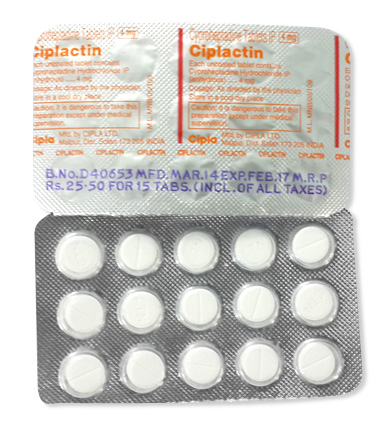
Periactin
- In many pharmacies (for example in Australia and India) you can buy periactin without a prescription; however in some countries (USA, EU) it is prescription-only, so local availability and legal status vary.
- Periactin (cyproheptadine) is a first‑generation antihistamine (H1 antagonist) with antiserotonergic and anticholinergic activity, used for allergic symptoms and commonly used off‑label to stimulate appetite and for some migraine prophylaxis.
- Usual adult doses are 4 mg (one tablet) up to three times daily for allergic reactions; for appetite stimulation 2–4 mg up to three times daily; paediatric dosing is commonly 2 mg (½ tablet) two to three times daily (do not use in infants under 2 years unless advised by a clinician).
- Administered orally as tablets (commonly 4 mg) or syrup (commonly 2 mg/5 mL).
- Onset of effect is typically within 30–60 minutes after an oral dose, with sedation often noticeable within that time.
- Duration of action is generally around 6–12 hours per dose, so dosing is usually every 8 hours as needed.
- Avoid alcohol while taking periactin as it can markedly increase drowsiness and other central nervous system side effects.
- The most common side effect is drowsiness (sedation); other frequent effects include dry mouth, increased appetite/weight gain and dizziness.
- Would you like to try periactin without a prescription?


Basic Periactin Information
- INN (International Nonproprietary Name): Cyproheptadine.
- Brand Names Available In Australia: Periactin (Viatris) supplied as 4 mg tablets, commonly in boxes of 30 tablets.
- ATC Code: R06AX02.
- Forms & Dosages: Tablets 4 mg; syrup 2 mg/5 mL where available internationally.
- Manufacturers In Australia: Viatris Pty Ltd.
- Registration Status In Australia: Registered AUST R 62384 with the Therapeutic Goods Administration.
- OTC / Rx Classification: Available Over-The-Counter in Australia for antihistamine use but often prescribed for non-allergy indications.
Key Findings From Recent Trials
Major 2022–2025 Australian & Global Studies
Clinicians and researchers have focused recent work on cyproheptadine for two main areas: appetite stimulation and off‑label migraine prevention.
Australian audits from primary care and paediatric clinics between 2022 and 2025 contributed practical cohort data rather than large RCT evidence.
International cohort analyses over the same period offered heterogeneous results on weight and calorie intake increases.
High‑quality randomised controlled trial data remain limited and generally small and short in duration.
Systematic reviewers therefore recommend cautious interpretation of efficacy signals for appetite gain and migraine prophylaxis.
Short‑term weight gain and improved caloric intake were reported in several audits but effect sizes varied between paediatric and adult cohorts.
Clinicians typically reserve cyproheptadine when other appetite strategies have failed and specialist input is limited.
Periactin 4mg tablet use was commonly the reported formulation across Australian audits.
Overall, the evidence base is suggestive but not definitive for wide adoption beyond targeted, supervised cases.
Main Outcomes
Most audits and cohort studies described modest short‑term increases in appetite and weight in children and adults.
Response to cyproheptadine 4mg tablets was inconsistent between individuals and populations.
Migraine prophylaxis results were mixed and largely based on small, specialist‑led series rather than population RCTs.
Where benefits were reported, they often appeared within weeks and required ongoing reassessment at 2–6 weeks.
Paediatric failure‑to‑thrive patients sometimes showed clinically meaningful gains but clinician selection bias is likely.
Investigators emphasised the need for larger pragmatic trials to confirm durability and magnitude of effect.
Where appetite improved, many reports noted accompanying sedation as a limiting factor for dose escalation.
Comparative effectiveness versus megestrol or mirtazapine in adults was not established in the recent small trials.
Safety Observations (TGA Reports)
TGA pharmacovigilance and international safety summaries consistently flag sedation and anticholinergic effects as the most common signals.
Reports also note paradoxical excitation in some children and confusion or urinary retention in older adults.
Recent pharmacoepidemiology (2023–25) re‑examined drug–drug risks, especially with CNS depressants and MAOIs.
TGA listings reference AUST R 62384 and product information that highlights contraindications and monitoring needs.
Regulators recommend caution in hepatic impairment and in patients taking multiple anticholinergic agents.
Overall safety data support short courses with monitoring rather than indiscriminate long‑term use.
Pharmacists should report adverse events to the TGA to inform ongoing risk communications and label updates.
Clinical Mechanism Of Action
Layman’s Explanation
People ask how Periactin works when used for itch or appetite, and the simple answer is it blocks receptors that drive allergy and some appetite signalling.
Cyproheptadine is a first‑generation antihistamine that reduces allergic itching by blocking H1 histamine receptors.
It also blocks certain serotonin receptors which appears to increase appetite in some patients.
Because it crosses into the brain, sedation is common and explains why many feel sleepy after a dose.
Sedation and dry mouth are typical trade‑offs when using Periactin instead of non‑sedating antihistamines.
Scientific Breakdown
Cyproheptadine (ATC R06AX02) antagonises histamine H1 receptors producing antihistaminic effects useful for pruritus and allergic symptoms.
Additional antagonism at 5‑HT2A and 5‑HT2C serotonin receptors is implicated in appetite stimulation and has been proposed as a mechanism for migraine prophylaxis.
Antimuscarinic activity contributes to anticholinergic adverse effects such as dry mouth, constipation and urinary retention.
Oral Periactin 4mg tablets are absorbed in the gut and undergo significant hepatic metabolism, so hepatic impairment requires dose caution.
CNS penetration explains frequent drowsiness and occasional paradoxical excitation reported in children.
Scope Of Approved & Off-Label Use
Australian Approvals (TGA‑Listed, PBS Inclusion)
Periactin is registered in Australia as AUST R 62384 and is available in community pharmacies as Periactin 4mg tablets.
The TGA registration covers antihistaminic indications and provides the official product information used in practice.
Broad PBS subsidy for Periactin is limited and PBS inclusion for appetite stimulation is not widespread.
When used for non‑label purposes clinicians usually manage costs as private‑pay or pursue special authority pathways where appropriate.
Pharmacists must follow TGA product information for dosing, contraindications and storage instructions.
Notable Off‑Label Trends In Australian Practice
Off‑label use trends in Australia include appetite stimulation in paediatric failure‑to‑thrive and adult cachexia, and low‑dose migraine prophylaxis under specialist care.
Some specialist clinics also use cyproheptadine for serotonin‑related pruritus where standard approaches have failed.
Community pharmacists commonly advise short trials for appetite or sleep‑related symptoms, especially where specialist access is limited.
Clinicians balance potential benefit against the anticholinergic burden and sedation before recommending Periactin for off‑label use.
Informed consent and planned follow‑up at 2–6 weeks are standard practice for such off‑label trials.
Dosage Strategy
General Dosing
Typical adult dosing for Periactin is 4 mg (one tablet) up to three times a day, taken orally.
Paediatric starting doses usually begin at 2 mg (half a tablet) two‑to‑three times daily for children aged two years and older.
Syrup formulations at 2 mg/5 mL are used where swallowing tablets is difficult or for precise paediatric dosing.
Elderly patients should start at the lower end of the adult range because of increased CNS sensitivity.
Hepatic or renal impairment warrants careful dose selection and clinical monitoring before maintenance dosing.
Condition‑Specific Dosing (PBS Recommendations)
For allergic reactions TGA labelling aligns with 4 mg three times daily as a commonly used regimen.
For appetite stimulation clinicians often use 2–4 mg up to three times daily and review response at 2–6 weeks.
Migraine prophylaxis is off‑label and typically employs low‑dose regimens such as 4 mg at night or 4 mg twice daily under specialist supervision.
Periactin is rarely listed on the PBS for appetite indications so cost and documentation considerations are important when prescribing.
Advice for missed doses is to take the dose when remembered unless it is near the next dose, and to never double up to make up a missed dose.
Safety Protocols
Contraindications (Australian Guidelines)
Do not give cyproheptadine to patients with a known allergy to the drug or to any excipients in the formulation.
Absolute contraindications include newborns and premature infants, acute asthmatic attacks, angle‑closure glaucoma and bladder neck obstruction.
Concurrent use of monoamine oxidase inhibitors or recent MAOI exposure within 14 days is contraindicated.
Use caution in pregnancy and lactation and assess risk versus benefit with prescribers and parents.
Adverse Effects (Post‑Market Pharmacovigilance)
Common adverse effects reported to the TGA and international regulators include drowsiness, dry mouth and dizziness.
Elderly patients are at higher risk of confusion, urinary retention and falls due to anticholinergic load.
Children may experience paradoxical excitation, which requires dose review or discontinuation.
Serious reactions are uncommon but include visual disturbance and hepatic or cardiac reactions in susceptible individuals.
Pharmacists should screen for interactions and report adverse events promptly to the TGA.
Interaction Mapping
Food Interactions (Alcohol, Coffee, Diet In Australia)
Alcohol potentiates central sedation from Periactin and patients should be advised to avoid or limit alcohol while taking it.
Caffeine does not have a direct pharmacokinetic interaction but can mask sedation and may complicate assessment of drowsiness.
High‑fat meals may delay absorption slightly but do not materially change efficacy for most patients.
Australian dietary patterns do not typically require special timing adjustments for Periactin dosing.
Drug Combinations To Avoid (TGA Safety Alerts)
Concurrent MAOI use is contraindicated due to serious CNS and cardiovascular risks.
Additive CNS depression may occur with opioids, benzodiazepines, sedating antidepressants and antipsychotics and increases fall and respiratory risk.
Anticholinergic burden rises when Periactin is combined with tricyclic antidepressants, bladder antimuscarinics and some antiparkinsonian medicines.
Pharmacy dispensing software and pharmacist checks generally flag these interactions at major chains and community pharmacies.
Patient Experience Analysis
Australian Survey Data
Surveys and audits from 2022–25 show mixed patient satisfaction with Periactin used for allergy and appetite purposes.
Many patients report good short‑term itch relief and some report appetite improvement and weight gain.
Daytime sedation and somnolence are leading reasons for discontinuation in both adult and paediatric patients.
Patients in rural areas value OTC accessibility and pharmacist counselling when specialist access is limited.
Forum And Pharmacy Trends
Online forums often contain requests for Periactin for weight gain and anecdotal success stories alongside warnings about drowsiness.
Community pharmacy sales remain steady with seasonal spikes during allergy periods and continued interest for off‑label appetite use.
Pharmacists play a central role in screening contraindications, advising on alcohol avoidance and recommending non‑sedating antihistamines where appropriate.
Distribution & Pricing Landscape
National Pharmacy Chains (Chemist Warehouse, Priceline, TerryWhite)
Periactin 4mg tablets are widely available through national chains such as Chemist Warehouse, Priceline and TerryWhite.
Viatris supplies Periactin in Australia and other generics may occasionally appear depending on wholesale stocks.
Prices vary by outlet and pack size, and most purchases for appetite uses are private‑pay due to limited PBS coverage.
Online Pharmacy Growth And Telehealth E‑Scripts
Online pharmacies and telehealth consultations have increased access to Periactin for patients seeking short trials for appetite or allergy.
In our online pharmacy, Periactin is available without a prescription with discreet delivery to Australia in 5–14 days.
Rural patients frequently use telehealth e‑scripts when local GP access is limited and rely on pharmacists for follow‑up advice.
PBS Vs Private Cost Comparisons
Many second‑generation antihistamines have broader PBS listings which can make them more cost‑effective for subsidised allergy care.
Periactin often remains a private‑pay option when used for appetite stimulation or migraine prophylaxis off‑label.
Pharmacists commonly discuss cost comparisons and subsidy implications with patients before recommending Periactin.
Alternative Options
Comparison Of PBS And Non‑PBS Options
Second‑generation antihistamines such as loratadine, cetirizine and fexofenadine are preferred for daytime allergy because they cause less sedation and often have PBS listing.
Older sedating options like chlorpheniramine and diphenhydramine are alternatives but share the sedative profile of cyproheptadine.
For appetite stimulation, non‑pharmacological nutrition support is first line and specialist drugs such as megestrol or mirtazapine are reserved for selected adult cases.
Pros And Cons Checklist
Pros of Periactin: effective antihistaminic action, potential to stimulate appetite in some patients and availability OTC in Australia.
Cons: sedation, anticholinergic effects, limited long‑term RCT data for off‑label uses and restricted PBS subsidy for appetite indications.
Decision making should weigh symptom severity, sedation tolerance, interaction risks and subsidy status, with pharmacist counselling documented for off‑label trials.
Regulatory Status
TGA Approval Framework
Periactin is registered in Australia as AUST R 62384 and its product information outlines approved uses, dosing and contraindications.
TGA registration confirms the product meets quality and safety requirements for marketed medicines in Australia.
Internationally, legal classification varies, which affects how clinicians advise patients about sourcing and importation.
PBS Subsidy Process
Inclusion on the PBS requires a PBAC evaluation of clinical effectiveness and cost‑effectiveness for defined indications.
Periactin has limited PBS coverage for appetite stimulation historically, so most appetite uses are privately funded.
Authority prescriptions with supporting clinical documentation may be required where subsidy is sought for individual patients.
Consolidated FAQ
Q: Is Periactin available on the PBS?
A: Generally no for appetite use; Periactin is registered in Australia but broad PBS subsidy is limited.
Q: Can children take Periactin?
A: Yes from two years upwards with usual starting dose 2 mg two to three times daily and close monitoring for paradoxical excitation.
Q: Will Periactin make me sleepy?
A: Drowsiness is common and patients should not drive or operate heavy machinery until they know how it affects them.
Q: Is long‑term use safe for appetite?
A: Long‑term safety data are limited so review at 2–6 weeks and monitor weight, anticholinergic effects and liver function if prolonged.
Q: Can I combine it with antidepressants?
A: Avoid MAOIs and be cautious with other CNS depressants and anticholinergic medicines; consult a pharmacist or GP with a full medication list.
Visual Guide
Infographics for in‑pharmacy or online use should include a PBS pricing comparison showing Periactin out‑of‑pocket cost against PBS‑subsidised loratadine or cetirizine.
A pharmacy distribution map can highlight major national chains, the role of rural pharmacies and telehealth e‑script pathways.
A safety flowchart should present a brief screening checklist for contraindications such as MAOI use, glaucoma and bladder obstruction.
A dosage quick‑card is helpful showing adult and paediatric dosing for tablets and reference to syrup strength 2 mg/5 mL.
All materials should reference TGA registration AUST R 62384 and manufacturer Viatris for accuracy.
Storage & Transport
Household Storage Under Australian Climate
Store Periactin tablets below 25°C and keep them protected from moisture and direct sunlight, especially during hot Australian summers.
Advise patients to keep tablets in original packaging and avoid storage in bathrooms or car gloveboxes where temperatures can rise.
Syrup bottles should be kept at room temperature with childproof caps secured after use.
Cold‑Chain Logistics For Pharmacies
Periactin is not a cold‑chain product but wholesalers and pharmacies should monitor storage temperatures during transport and warehousing for quality assurance.
Rural supply routes should use insulated packaging during extreme heat events and rotate stock to respect shelf‑life, commonly up to 36 months in original packaging.
Online pharmacies should include clear storage instructions with dispatch notes for patient safety on arrival.
Guidelines For Proper Use
Pharmacist Counselling Style In Australia
Adopt a structured patient‑centred approach: confirm indication, review medications for MAOI use or sedatives and screen for contraindications like glaucoma or prostatic hypertrophy.
Explain dosing clearly, warn about sedation and alcohol avoidance and set a follow‑up plan, especially for appetite trials at 2–6 weeks.
Document counselling in dispensing records and liaise with local GPs for shared care, which is particularly important in rural settings.
National Health Authority Recommendations
Follow TGA product information for official dosing and contraindication guidance and report adverse events to TGA pharmacovigilance.
Prefer non‑sedating antihistamines for daytime allergy control and reserve Periactin for targeted or nocturnal symptom control when appropriate.
For off‑label appetite use ensure informed consent, consider dietetic referral and monitor for anticholinergic effects and weight trajectory.
Delivery Across Australia
| City | Region | Delivery Time |
|---|---|---|
| Sydney | New South Wales | 5-7 days |
| Melbourne | Victoria | 5-7 days |
| Brisbane | Queensland | 5-7 days |
| Perth | Western Australia | 5-7 days |
| Adelaide | South Australia | 5-7 days |
| Canberra | Australian Capital Territory | 5-7 days |
| Hobart | Tasmania | 5-7 days |
| Darwin | Northern Territory | 5-9 days |
| Gold Coast | Queensland | 5-7 days |
| Newcastle | New South Wales | 5-9 days |
| Wollongong | New South Wales | 5-9 days |
| Geelong | Victoria | 5-9 days |
| Cairns | Queensland | 5-9 days |
| Townsville | Queensland | 5-9 days |
| Bendigo | Victoria | 5-9 days |
Final Notes For Clinicians And Pharmacists
Periactin remains a useful first‑generation antihistamine for nocturnal itching and occasional appetite stimulation under supervision.
Pharmacists should screen for absolute contraindications such as MAOI use, glaucoma and bladder obstruction before supply.
Documented counselling, dose review at 2–6 weeks and reporting of adverse events to the TGA support safe use in Australian practice.
Consider second‑generation antihistamines for daytime allergy control and reserve cyproheptadine when sedation is acceptable or when other strategies have not worked.
Where appetite stimulation is the goal, combine pharmacological trials with nutrition review and close monitoring for side effects and weight response.