
Telfast
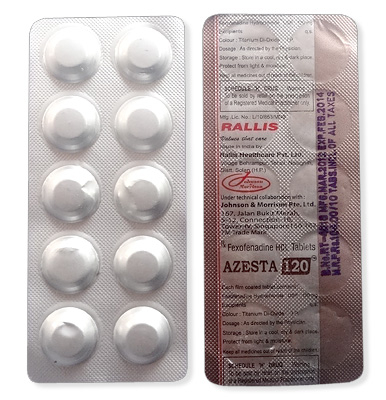
Telfast
- In many pharmacies across Australia and via licensed online e‑pharmacies, Telfast (fexofenadine) is available over the counter — you can buy telfast without a prescription; home delivery and discreet packaging are commonly offered.
- Telfast is used to treat allergic conditions such as seasonal allergic rhinitis (hay fever) and chronic idiopathic urticaria. It is a selective peripheral histamine H1‑receptor antagonist (non‑sedating), which blocks the action of histamine and reduces allergy symptoms with minimal central nervous system penetration.
- Usual dosages: Adults and teens ≥12 years — 60 mg twice daily or 120–180 mg once daily; Children 6–11 years — 30 mg twice daily (suspension or ODT preferred); for chronic urticaria dosing is similar. Reduce dose or use lowest effective dose in severe renal impairment.
- Form of administration: oral — film‑coated tablets (30, 60, 120, 180 mg), oral disintegrating tablets (30 mg) and oral suspension (30 mg/5 ml).
- Onset time: symptom relief usually begins within about 1 hour after dosing.
- Duration of action: effects can last up to 24 hours with once‑daily higher doses (120–180 mg); a 60 mg dose is often given twice daily for roughly 12‑hour coverage.
- Alcohol warning: avoid or use alcohol with caution — although Telfast is less sedating than first‑generation antihistamines, alcohol may increase drowsiness or impair alertness.
- Most common side effec: headache, drowsiness (less common), dizziness, nausea, dry mouth and fatigue.
- Would you like to try telfast without a prescription?
Basic Telfast Information
- INN (International Nonproprietary Name): Fexofenadine (fexofenadine hydrochloride).
- Brand Names Available In Australia: Telfast is marketed in Australia; Allegra and other regional brand variants are noted internationally.
- ATC Code: R06AX26.
- Forms & Dosages: Film-coated tablets 30 mg, 60 mg, 120 mg, 180 mg; oral suspension 30 mg/5 ml; oral disintegrating tablet 30 mg for paediatrics.
- Manufacturers In Australia: Innovator brand is Sanofi‑Aventis internationally; multiple generics are supplied by manufacturers such as Medichem, Cipla, Mylan and Sandoz and appear on pharmacy lists.
- Registration Status In Australia: Registered with the TGA and marketed under Telfast and generic fexofenadine formulations; status typically OTC for common strengths.
- OTC / Rx Classification: Varies by formulation and strength in different markets; most 60 mg and 120 mg products and many generics are available OTC for allergy indications.
Key Findings From Recent Trials
Major 2022–2025 Australian & Global Studies
Patients ask whether telfast actually controls hay fever without making them drowsy.
Recent randomised controlled trials and pharmacoepidemiology analyses from 2022–2024 remain the strongest evidence base for fexofenadine’s efficacy and safety.
Australian primary‑care cohort studies and TGA post‑market reviews through 2023 found continued low sedation rates versus older antihistamines and no signal for QT prolongation at standard doses.
International RCTs comparing fexofenadine 120–180 mg with cetirizine and loratadine reported equivalent symptom control with fewer reports of somnolence.
Meta‑analyses up to 2024 confirm non‑sedating H1 antagonists reduce nasal and ocular symptoms in seasonal allergic rhinitis.
Pooled trials showed higher single doses (180 mg) can benefit patients with refractory chronic urticaria.
Emerging 2024–25 trends include growth of OTC use in urban Australia via pharmacy‑led consultations and telehealth e‑prescribing for paediatric ODT and suspension formulations.
TGA adverse‑event summaries list headache and dry mouth as the commonest reports, while severe hypersensitivity remains rare.
Practical implication: fexofenadine’s profile supports first‑line non‑sedating therapy and positions pharmacists to help with dose selection and safety checks.
Clinical Mechanism Of Action
Layman’s Explanation
What does telfast do and why won’t it usually make you sleepy?
Fexofenadine is a second‑generation H1 antihistamine that blocks histamine at peripheral H1 receptors to relieve sneezing, itching, runny nose and hives without significant drowsiness.
It acts quickly for many users, often within an hour, and provides around 24‑hour symptom control at standard once‑daily dosing.
Scientific Breakdown
Fexofenadine hydrochloride is a selective inverse agonist at H1 receptors, classified under ATC R06AX26.
Its low central nervous system penetration explains the minimal sedation compared with first‑generation agents.
Pharmacokinetics
Absorption: Oral bioavailability is reduced by fruit juices such as apple, orange and grapefruit because of OATP transport inhibition.
Peak plasma concentrations are typically reached around 1–3 hours after dosing.
Distribution & Metabolism: There is minimal hepatic metabolism and much of the drug is excreted unchanged in faeces and urine.
Elimination: Renal clearance contributes to removal, so dose caution is advised in severe renal impairment.
Pharmacodynamics
Onset and Duration: Onset is approximately one hour and the effect generally lasts about 24 hours for 120–180 mg doses.
Dose–Response: Clinical regimens include 60 mg twice daily or 120–180 mg once daily depending on the condition and patient preference.
Clinical Note For Australia: ODT and suspension formats improve paediatric adherence and pharmacists should counsel patients to avoid fruit juices near dosing and to check renal function where indicated.
Scope Of Approved & Off‑Label Use
Australian Approvals (TGA‑Listed, PBS Inclusion)
Is telfast available over the counter or on the PBS?
Fexofenadine is TGA‑registered and marketed in Australia under brand names including Telfast and generic fexofenadine formulations.
Most adult strengths such as 60 mg and 120 mg are available OTC through pharmacies, though classification may vary by strength and presentation.
PBS inclusion is limited and fexofenadine is usually purchased privately by patients.
Community pharmacy chains including Chemist Warehouse, Priceline and TerryWhite commonly stock films, ODTs and oral liquid for paediatric use.
Notable Off‑Label Trends In Australian Practice
Specialists and GPs sometimes use higher single doses like 180 mg off‑label for refractory chronic urticaria where standard doses fail.
Paediatric off‑label dosing involves ODTs or suspensions for children under six when clinically indicated, accompanied by pharmacist counselling.
Rural prescribers report reliance on stock availability and telehealth e‑scripts for continuity of care in remote areas.
Safety governance through TGA post‑market monitoring and pharmacist triage is key when managing off‑label and OTC use.
Dosage Strategy
General Dosing
What dose should an adult start on and how do parents dose children?
Standard adult regimens per product information are 60 mg twice daily or 120–180 mg once daily for seasonal allergic rhinitis and chronic idiopathic urticaria.
Children aged 6–11 years typically use 30 mg twice daily, usually as an ODT or oral suspension.
In practice pharmacists often recommend 120 mg once daily or 60 mg twice daily for adults depending on symptom timing and patient preference.
Condition‑Specific Dosing (PBS Recommendations)
Seasonal Allergic Rhinitis: Adults and teens aged 12 years and over — 60 mg twice daily or 120/180 mg once daily.
Children 6–11 years — 30 mg twice daily.
Chronic Idiopathic Urticaria: Adults and teens ≥12 years — 60 mg twice daily or 180 mg once daily.
Children 2–11 years — 30 mg twice daily as suspension or ODT.
PBS Recommendations: Fexofenadine has limited PBS listing and prescribers may use PBS‑subsidised antihistamines where criteria apply.
Pharmacists should document indication when substituting generics and advise on renal dosing adjustments for severe impairment.
Practical Note: Avoid co‑administration with fruit juices and advise older patients to monitor for dizziness or headache despite minimal sedation.
Safety Protocols
Contraindications (Australian Guidelines)
Who should not take telfast?
Absolute contraindications include known hypersensitivity to fexofenadine or any excipient in the product.
Relative cautions include severe renal impairment, pregnancy and breastfeeding where use should be based on clinical judgement, and a history of significant cardiac arrhythmias.
At authorised doses QT prolongation is not a prominent signal in post‑market data.
Adverse Effects (Post‑Market Pharmacovigilance)
Common side effects reported to the TGA and internationally include headache, dizziness, nausea, dry mouth and fatigue.
Somnolence rates are lower than first‑generation antihistamines because fexofenadine crosses the blood–brain barrier minimally.
Rare adverse events include hypersensitivity reactions and very occasional cardiac events; suspected reactions should be reported to the TGA.
Overdose usually causes dizziness and drowsiness and there is no specific antidote.
Practical Safety Protocol
Pharmacists should screen for renal disease, ask about fruit‑juice habits and review concomitant medicines that might affect renal clearance.
Advise older patients about fall risk if they experience dizziness or lightheadedness.
Document adverse events and consider specialist referral for refractory urticaria or suspected severe reactions.
Interaction Mapping
Food Interactions (Alcohol, Coffee, Diet In Australia)
Will my breakfast juice stop telfast from working?
The strongest documented interaction is reduced oral absorption when fexofenadine is taken with fruit juices such as apple, orange and grapefruit due to OATP transport inhibition.
Counsel patients to take tablets with water and to avoid fruit juice for a few hours around dosing to preserve bioavailability.
Although fexofenadine is low‑sedation, alcohol and other CNS depressants can still worsen dizziness or impairment, so caution is advised for drivers and heavy machinery operators.
Drug Combinations To Avoid (TGA Safety Alerts)
There are no routine cytochrome‑mediated contraindications because fexofenadine is minimally metabolised.
Exercise caution when co‑prescribing other QT‑prolonging agents in patients with cardiac risk, and avoid combining with other sedating antihistamines or CNS depressants.
Pharmacy Tip: Use a thorough medication history to flag fruit‑juice habits, herbal supplements and OTC sleep aids before recommending telfast.
Patient Experience Analysis
Australian Survey Data
What do users actually say about telfast in Australia?
Surveys and pharmacy sales trends from 2022–24 show non‑drowsiness, rapid onset and price are the top decision drivers for antihistamine choice.
Online search interest spikes for terms like Allegra 180 mg and Telfast during spring hay fever peaks.
Many consumers select pharmacy chains such as Chemist Warehouse and Priceline for price and convenience.
Forum And Pharmacy Trends
Patient forums commonly report that fexofenadine controls nasal and ocular symptoms with less sedation than cetirizine, although some users describe headaches or dizziness.
Pharmacies note strong uptake of ODT and suspension formats for children and bulk purchases in urban areas.
Rural patients emphasise access and continuity, relying on telehealth e‑scripts and local pharmacy dispensing when stock is limited.
Price sensitivity is significant; lack of PBS subsidy leads many to choose cheaper generics or alternative antihistamines.
Patient Counselling Implication: Pharmacists should validate symptom relief timelines, reinforce juice‑avoidance advice and document side effects for prescribers.
Distribution & Pricing Landscape
National Pharmacy Chains (Chemist Warehouse, Priceline, TerryWhite)
Where can Australians buy telfast and how does price competition look?
Telfast and generic fexofenadine are widely stocked in national pharmacy chains including Chemist Warehouse, Priceline and TerryWhite in multiple strengths and paediatric formats.
In‑store pharmacist consultations strongly influence product selection and dosing, and chains compete on price with private‑label generics.
Online Pharmacy Growth And Telehealth E‑Scripts
Online sales and telehealth‑issued e‑scripts have accelerated OTC and prescription access, particularly since 2020.
Australian e‑pharmacies offer click‑and‑collect and home delivery, and rural patients often use telehealth to obtain e‑scripts for paediatric suspensions when local stock is limited.
In our online pharmacy, telfast is available without a prescription, with discreet delivery to Australia in 5‑14 days.
PBS Vs Private Cost Comparisons
Fexofenadine is generally not widely listed on the PBS and most purchases are private.
Costs vary by brand, strength and retailer; generics typically cost less than innovator brands.
For long‑term urticaria management clinicians may discuss cost‑effective alternatives and eligibility for PBS‑subsidised therapies where criteria apply.
Pharmacists should provide price comparisons and warn that seasonal demand can affect supply.
Alternative Options
Comparison (PBS And Non‑PBS Options)
Cetirizine and loratadine are commonly PBS‑subsidised for qualifying indications and are typical first‑line cost‑sensitive choices.
Fexofenadine is usually a private purchase, available as Telfast and generics in strengths from 30 mg to 180 mg and in ODT and liquid formats.
Pros And Cons Checklist
Efficacy: Fexofenadine provides symptom control comparable to cetirizine and loratadine for hay fever and urticaria.
Sedation: Sedation is generally lower with fexofenadine compared with some alternatives.
Cost: PBS items can be cheaper for long‑term therapy, while fexofenadine price varies by retailer.
Availability: Fexofenadine is widely available OTC in urban pharmacies but rural stock variability can affect access.
Formulations: ODT and suspension formats assist paediatric adherence.
Clinical Advice: For patients concerned about sedation or inadequate symptom control, consider switching to fexofenadine and record the rationale in dispensing notes.
Regulatory Status
TGA Approval Framework
The TGA approves fexofenadine preparations for antihistamine indications and assesses quality, safety and efficacy for different formulations and strengths.
Some strengths may be scheduled differently, so availability OTC versus prescription depends on the assessed risk for that presentation.
Post‑market surveillance operates through mandatory adverse event reporting and national databases, and pharmacists should report suspected reactions to the TGA.
PBS Subsidy Process
PBS listing requires evidence of cost‑effectiveness against comparators plus clinical and economic data submissions.
Fexofenadine is generally not broadly PBS‑listed and subsidies often favour older, lower‑cost antihistamines unless specific criteria are met.
Clinicians can apply for authority prescriptions where PBS criteria are satisfied and pharmacists should assist patients by explaining private versus PBS status.
Visual Guide
Infographics: PBS Pricing, Pharmacy Distribution
Include a simple map showing PBS‑subsidised antihistamines versus private‑purchase items and show urban versus rural price and access differentials.
Supply chain flowcharts should show manufacturer to national chains to independent pharmacies and indicate points for e‑pharmacy fulfilment and telehealth e‑scripts.
Design Notes: Use icons for tablet, ODT and suspension; colour‑code subsidy status and overlay seasonal demand for spring and summer.
Include a data panel with INN fexofenadine, ATC R06AX26, common dosages 30–180 mg and storage instructions 20–25°C.
Provide alt text explaining PBS versus private distinctions and offer an exportable PDF for rural clinics.
Call To Action: Provide pharmacist contact details and links to check current retail prices and PBS status.
Delivery Across Australia
| City | Region | Delivery Time |
|---|---|---|
| Sydney | New South Wales | 5-7 days |
| Melbourne | Victoria | 5-7 days |
| Brisbane | Queensland | 5-7 days |
| Perth | Western Australia | 5-7 days |
| Adelaide | South Australia | 5-7 days |
| Canberra | Australian Capital Territory | 5-7 days |
| Hobart | Tasmania | 5-7 days |
| Gold Coast | Queensland | 5-9 days |
| Newcastle | New South Wales | 5-9 days |
| Wollongong | New South Wales | 5-9 days |
| Geelong | Victoria | 5-9 days |
| Townsville | Queensland | 5-9 days |
| Cairns | Queensland | 5-9 days |
| Darwin | Northern Territory | 5-9 days |
| Launceston | Tasmania | 5-9 days |
Storage & Transport
Household Storage Under Australian Climate
How should telfast be stored at home, especially in summer?
Store fexofenadine in the original packaging at 20–25°C, away from moisture and light.
Advise patients not to leave tablets in cars or in direct sunlight during hot Australian weather because excessive heat can degrade the product.
Oral suspensions may require refrigeration after opening; patients should check the pack insert for exact instructions and discard after the stated period.
Cold‑Chain Logistics For Pharmacies
Most solid oral forms do not require cold‑chain freight, but liquid suspensions may need temperature control during transport in hot regions.
Pharmacies should store stock in temperature‑monitored areas and record any deviations from recommended ranges.
Remote and rural pharmacies should have contingency plans during heatwaves and ensure online orders use protective packaging such as insulated envelopes or cold packs when appropriate.
Advise patients to dispose of expired or opened liquid formulations through pharmacy take‑back services where available.
Guidelines For Proper Use
Pharmacist Counselling Style In Australia
What should a pharmacy consultation for telfast cover?
Use a brief, structured consultation to confirm the indication, age, pregnancy or breastfeeding status, renal disease and concomitant medicines.
Ask about fruit‑juice habits specifically and recommend the appropriate formulation — ODT or suspension for children and 120–180 mg once daily or 60 mg twice daily for adults as clinically indicated.
Explain timing: take with water and avoid fruit juices within a few hours of dosing.
Set expectations: onset is about one hour for many users and reassess acute rhinitis after 48–72 hours if symptoms persist.
Refer patients promptly for persistent symptoms, signs of hypersensitivity or suspected severe adverse reactions and offer price options and generic substitutions.
Document advice in patient records and provide follow‑up where needed.
National Health Authority Recommendations
Follow TGA guidance on adverse event reporting and refer to RACGP and allergy/dermatology guidance for allergic rhinitis and urticaria management.
For chronic urticaria consider stepping up antihistamine dose under clinical supervision, bearing in mind some specialists use 180 mg for refractory cases.
For remote and Aboriginal and Torres Strait Islander communities coordinate with local health services to ensure culturally appropriate advice and access.
Consolidated FAQ
Can I buy Telfast without a prescription in Australia?
Yes — many fexofenadine strengths such as 60 mg and 120 mg are stocked OTC in pharmacies, though availability varies by strength and formulation; check with national chains or your local pharmacist.
Will Telfast make me drowsy?
Fexofenadine is a second‑generation non‑sedating antihistamine and crosses the blood–brain barrier minimally, so most users report little or no drowsiness; combine cautiously with alcohol or other sedatives.
Can children use Telfast?
Paediatric formulations such as 30 mg ODT or 30 mg/5 ml suspension are available for children, with dosing by age — typically 30 mg twice daily for children aged 2–11 years in urticaria and 6–11 years for allergic rhinitis — consult a pharmacist or GP for exact product‑specific dosing.
Are there cheap alternatives on the PBS?
Many antihistamines such as cetirizine and loratadine have PBS coverage in certain circumstances; fexofenadine is usually a private purchase, so ask a pharmacist about generics and PBS pathways.
Storage And Disposal Reminder
Store tablets at 20–25°C in original packaging and keep liquids refrigerated if the product insert requires it.
Dispose of expired or unwanted medicines through pharmacy return programs rather than household rubbish.
Final Notes
Telfast (fexofenadine) is a reliable non‑drowsy antihistamine option for many Australians seeking relief from hay fever and urticaria.
Pharmacists are well placed to advise on dosing, juice interactions and suitable formulations for children and older patients.
Report any suspected adverse reactions to the TGA and consult a GP or specialist for refractory symptoms.
Contact a pharmacist to check current retail prices, stock availability and PBS eligibility for your situation.