
Tretinoin Cream
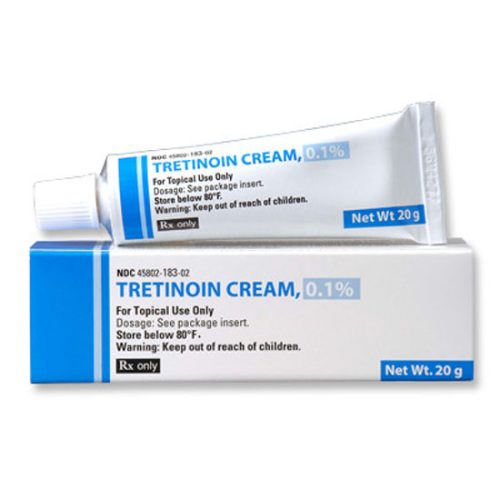
Tretinoin Cream
- In Australia, tretinoin cream is generally a prescription-only medicine, but availability can vary by pharmacy and online source. It is commonly sold in 20 g to 30 g tubes, and some suppliers may offer it without a prescription.
- Tretinoin cream is used mainly to treat acne and, in some cases, photoaging and fine wrinkles. It is a topical retinoid that works by increasing skin cell turnover, helping to unclog pores, reduce comedones, and improve skin texture over time.
- The usual dose is a thin layer applied once daily, usually at night. Common strengths are 0.025%, 0.05%, and 0.1%; many people start with the lowest strength and increase only if tolerated.
- The form of administration is a topical cream applied to the skin.
- It usually starts to work gradually, with some improvement seen after 2–4 weeks, but clearer results often take 6–12 weeks of regular use.
- The duration of action is about 24 hours per application, so it is typically used once daily as part of a continuing treatment course.
- Avoid or limit alcohol if it causes dehydration or worsens skin irritation, although alcohol does not have a direct major interaction with topical tretinoin cream.
- The most common side effects are redness, dryness, peeling, burning, itching, and increased skin sensitivity to sunlight. Some people also notice an initial acne flare during the first few weeks.
- Would you like to try tretinoin cream without a prescription?
Basic Tretinoin Cream Information
- INN (International Nonproprietary Name): Tretinoin
- Brand Names Available in Australia: Retrieve, Stieva-A
- ATC Code: D10AD01
- Forms & Dosages: Cream 0.025%, 0.05%, 0.1%; gel 0.01%, 0.025%, 0.05%; lotion 0.05%; capsules 10 mg
- Manufacturers in Australia: Not specified
- Registration Status In Australia: TGA, prescription-only in nearly all markets
- OTC / Rx Classification: Prescription-only (Rx)
- Standard Dosages: Acne vulgaris, thin layer once daily at night; photoaging and fine wrinkles, usually 0.05% cream once daily; oral APL, 45 mg/m²/day in two divided doses
- Side Effects: Redness, peeling, dryness, burning, itching, photosensitivity, irritation, increased acne flares in the first weeks
- Competitors: Adapalene, tazarotene, isotretinoin
Looking for a prescription retinoid cream that has stood the test of time?
Tretinoin cream remains one of the most talked-about acne and anti-ageing treatments in pharmacy practice.
It is used for blocked pores, inflammatory acne, post-acne marks, and photoaged skin, but the real difference usually comes down to consistent use and tolerability.
In Australian practice, the biggest hurdle is rarely whether tretinoin works.
It is whether the person can stick with it long enough to get results without giving up because of dryness, stinging, or peeling.
Key Findings From 2022–2025 Research On Tretinoin Cream
What The Latest Evidence Says
Recent dermatology reviews continue to support tretinoin cream as a gold-standard topical retinoid for acne and photoaging.
The strongest modern evidence still points to clear benefit for comedonal acne, inflammatory acne, fine wrinkles, rough texture, and sun-damaged skin.
Across 2022–2025 reviews, the message is steady rather than dramatic.
Low-strength tretinoin used regularly performs better over time than stop-start use, but irritation remains the main reason people quit too early.
That matters in Australia because patients often buy private scripts and expect a quick cosmetic result.
When the first week brings peeling or stinging, many assume the product is too strong and stop before the benefits appear.
Main Outcomes
Improved acne lesion counts are the most consistent outcome seen with tretinoin 0.025% and tretinoin 0.05% cream.
Texture, dyschromia, and markers of photoaging also improve with steady use.
Most benefit appears after 6 to 12 weeks, not after a few applications.
Safety Observations
Irritation, dryness, erythema, and photosensitivity remain the dominant topical problems.
Pregnancy caution stays central to counselling because tretinoin is a retinoid with known risk concerns.
Good pharmacist advice should focus on correct use, slow titration, moisturiser support, and daily sunscreen.
Clinical Mechanism Of Action: How Tretinoin Cream Works
Layman’s Explanation
Ever wondered why tretinoin can make skin worse before it looks better?
The short answer is that it speeds up skin cell turnover.
That helps stop pores from clogging, supports smoother renewal, and gradually softens roughness and post-acne marks.
Dryness often shows up before visible improvement, which is why proper counselling matters so much.
Scientific Breakdown
Tretinoin is the INN for this active ingredient, and its ATC code is D10AD01.
That places it in the topical retinoid group for acne treatment.
At a receptor level, it binds retinoic acid receptors and influences keratinisation and follicular epithelial differentiation.
In plain English, that means less microcomedone formation and better long-term remodelling of photoaged skin.
This is why tretinoin prescription Australia searches often come from people wanting a serious acne cream prescription rather than a cosmetic moisturiser.
Why It Takes Time
Early peeling or inflammation can happen before clearer skin appears.
Clinical response usually takes weeks, not days.
Consistency matters more than bursts of use, missed nights, or “catch-up” applications.
Scope Of Approved And Off-Label Use In Australia
Australian Approvals
In Australia, tretinoin is prescription-only and used under medical supervision.
Availability can vary by supplier and brand, and patients may need pharmacy ordering through urban and regional networks.
PBS support may apply depending on the product and indication, so the out-of-pocket cost can differ a lot between subsidised and private supply.
That is one reason patients often compare Retrieve cream and Stieva-A cream when they are trying to understand access and price.
Notable Off-Label Trends In Australian Practice
Dermatologists and general practitioners commonly use tretinoin cream for acne, post-acne marks, and photoaging.
Off-label use for fine wrinkles is common in private practice, particularly for patients seeking a prescription-strength anti-ageing cream rather than a cosmetic-only product.
In our online pharmacy, tretinoin cream is available without a prescription, with discreet delivery to Australia in 5-14 days.
Real-World Access Points
Chemist Warehouse, Priceline, TerryWhite, and independent pharmacies are common access points.
Telehealth e-scripts have improved access in metro areas and made repeat ordering much easier.
Rural patients can face stock delays and fewer brand choices, so planning ahead helps.
Dosage Strategy And Practical Regimen Selection
General Dosing
The usual approach is a thin layer applied once nightly to clean, fully dry skin.
Common cream strengths are tretinoin 0.025%, tretinoin 0.05%, and 0.1%.
For first-time users, starting low is usually the safest and most tolerable choice, especially if the skin is sensitive.
That is why a prescription retinoid cream is often started more slowly than people expect.
Condition-Specific Dosing
For acne, lower strengths are usually preferred at initiation.
For photoaging, 0.05% cream is commonly used.
Topical safety and efficacy are established for children over 12, while younger children require specialist care and lower strengths if used at all.
Practical Titration
Start with 2 to 3 nights a week if irritation is likely.
Increase as tolerated.
Do not double up after a missed dose.
Do not apply more than directed because more product does not mean faster results.
Safety Protocols, Contraindications And Adverse Effects
Contraindications
Known hypersensitivity to tretinoin or formulation excipients is a clear avoid-use situation.
Pregnancy is a major concern for topical retinoid use, and planning pregnancy also needs careful review.
Do not apply tretinoin cream to eczematous, sunburned, or severely irritated skin.
Breastfeeding patients and people with a history of eczema or very sensitive skin should be assessed closely before starting.
Adverse Effects
The common topical effects are redness, peeling, dryness, burning, itching, and photosensitivity.
Some people also get an early acne flare in the first weeks, which can be unsettling but is a known pattern.
Oral tretinoin is a different medicine used in acute promyelocytic leukaemia, where serious risks such as differentiation syndrome can occur, but that is not relevant to routine cream use.
When To Pause Or Reassess
Severe stinging or cracking needs a review.
Worsening dermatitis is a reason to stop and reassess.
Possible contact allergy should be checked by a clinician.
If the skin still cannot tolerate treatment after reducing frequency, an alternative such as adapalene may be worth considering.
Interaction Mapping: What To Avoid With Tretinoin Cream
Food Interactions
Topical tretinoin does not have meaningful food interactions like oral medicines do.
Australian patients still ask about alcohol, coffee, supplements, and diet, but the bigger issue is skin irritation rather than meal timing.
A Friday-night pizza does not affect the medicine.
An alcohol-heavy toner very much can.
Drug Combinations To Avoid
Avoid layering tretinoin with other irritating actives unless a prescriber has told you to do so.
Benzoyl peroxide, strong exfoliating acids, abrasive scrubs, and alcohol-heavy toners can push irritation too far.
Using more than one topical retinoid at the same time is generally not a good idea.
Pharmacy Counselling Points
Separate active products by time of day.
Moisturiser buffering may help some patients continue treatment.
Daily sunscreen is non-negotiable.
If pregnancy is planned, safer alternatives should be reviewed early.
Patient Experience Analysis In Australia
Australian Survey Data
Australian patients tend to care most about visible results, affordability, and plain-English pharmacy advice.
Price sensitivity is high, especially when PBS support reduces out-of-pocket costs.
Irritation is the leading reason for stopping, not lack of efficacy.
That is why clear instructions matter just as much as the medicine itself.
Forum And Pharmacy Trends
Online discussions in Australia often focus on purging, when to start, how to layer moisturiser, and whether tretinoin is better than adapalene.
Pharmacy counters still play a major role because face-to-face counselling can improve persistence and reduce misuse.
Many people are relieved when they hear that early dryness is common and that slow build-up is normal.
What Patients Want
People want simple starter schedules.
They want advice for sensitive skin.
They want realistic cost expectations.
They want clear guidance on pregnancy and sun protection.
Distribution And Pricing Landscape In Australia
National Pharmacy Chains
Access commonly runs through Chemist Warehouse, Priceline, TerryWhite, and independent pharmacies.
Stock can differ by suburb and state, and rural pharmacies may need lead time to order in supply.
Brand choice also matters, especially when a patient is comparing Retrieve Australia options with a private script for tretinoin cream.
Online Pharmacy Growth And Telehealth E-Scripts
Telehealth and e-scripts have made repeat access easier for many Australians.
That convenience is useful, but it also increases the importance of pharmacist counselling so the cream is used properly.
People often order on a Thursday night and want to start on the weekend, which is exactly when clear first-step advice helps.
PBS Versus Private Cost Comparisons
When PBS applies, the patient contribution can be much lower than private pricing.
For private scripts, brand, tube size, and pharmacy mark-up matter more.
Rural delivery delays and stock shortages can also affect the final buying decision.
Practical Australian Buying Factors
Stock availability matters.
PBS status matters.
Generic versus branded supply matters.
Delivery time matters, especially outside major cities.
Alternatives And Competitor Comparison
Comparison Of Common Options
Tretinoin competes with adapalene, tazarotene, and isotretinoin.
Adapalene is often better tolerated and may be easier for first-time users.
Tazarotene is potent but tends to be harsher and is usually specialist-led.
Isotretinoin is reserved for severe acne and is far more tightly regulated because of teratogenicity.
Pros And Cons Checklist
Tretinoin Cream
Pros: strong evidence base, excellent for acne and photoaging, widely recognised in dermatology.
Cons: more irritating than some alternatives, needs patience and careful use.
Adapalene
Pros: often better tolerated, useful for acne, helpful for patients who are sensitive to retinoids.
Cons: may not be the first choice when photoaging is the main concern.
Tazarotene
Pros: potent topical retinoid.
Cons: often harsher and usually managed by specialists.
Regulatory Status In Australia
TGA Approval Framework
Tretinoin is prescription-only in nearly all markets and endorsed for dermatologic use by regulators such as the TGA in Australia.
That framework reflects its potency and its irritation risk.
It also supports safe pregnancy counselling and proper acne use under medical supervision.
PBS Subsidy Process
PBS status affects affordability and access, but not every brand or formulation is treated the same way.
Some patients need the prescriber to choose the most suitable product, and the pharmacy may need to order stock if it is not routinely held.
This is one reason a pharmacist’s role remains important long after the script is written.
Why Regulation Matters
It helps standardise access and pricing.
It reinforces correct acne use.
It encourages pharmacist involvement in counselling.
It protects patients who may be planning pregnancy or have sensitive skin.
Consolidated Frequently Asked Questions For Australian Patients
Common Patient Questions
How long until tretinoin cream works? Usually 6 to 12 weeks.
Can I use it every night straight away? Not always, because sensitive skin may need gradual build-up.
Is it available at Chemist Warehouse or Priceline? Often yes, but stock and brand vary.
Can I use it in pregnancy? Generally no, especially without specialist advice.
Do I still need sunscreen? Yes, daily SPF is essential.
Search Intent Matches
People searching for tretinoin cream for acne usually want a simple starter routine.
Those looking for Retin-A anti-ageing cream often want a prescription-strength option for texture and fine lines.
Searches for tretinoin prescription Australia usually come from people comparing access, price, and brand choice.
Visual Guide Ideas For Australian Publishing
Infographics To Include
A good article like this benefits from a price and access graphic that shows PBS versus private cost.
A pharmacy map can also help patients see where tretinoin is commonly sourced.
Suggested Visual Assets
Infographic One
Show how tretinoin works by illustrating skin cell turnover and pore unclogging.
Infographic Two
Show where Australians buy tretinoin, including Chemist Warehouse, Priceline, TerryWhite, and independents.
Infographic Three
Show the nightly application steps: cleanse, dry, pea-sized amount, moisturiser, sunscreen.
Storage And Transport Under Australian Conditions
Household Storage
Store tretinoin cream below 25°C.
Do not freeze it.
Protect it from light and excessive moisture.
Keep the tube tightly closed and away from children.
Bathrooms, cars, and sun-exposed bags are poor storage spots in Australian heat.
Cold-Chain Logistics For Pharmacies
Tretinoin cream does not usually need cold-chain transport.
Even so, stock integrity still matters during storage and delivery.
Rural deliveries can face heat exposure, so pharmacists should check packaging condition when stock arrives.
Patient Advice
Keep the tube out of reach of children.
Do not leave it in the car.
Ask the pharmacy about hot-weather ordering if delivery is delayed.
Guidelines For Proper Use And Pharmacist Counselling
Pharmacist Counselling Style In Australia
Australian pharmacists play a central role in tretinoin success.
They often explain how to start slowly, how to reduce irritation, and why sunscreen matters.
That becomes especially important when a patient has paid privately and expects fast results.
A good counselling chat can prevent unnecessary frustration and improve persistence.
National Health Authority Recommendations
The best-practice approach is to apply a thin layer at night.
Do not apply to broken or sunburned skin.
Reassess if irritation is significant.
Do not double after missed doses.
Seek medical advice for pregnancy planning.
Core Counselling Script
Use a pea-sized amount only.
Apply at night.
Use moisturiser if needed.
Wear daily SPF 30+ or higher.
Review promptly if eczema or severe irritation develops.
Delivery Across Australia
| City | Region | Delivery time |
|---|---|---|
| Sydney | New South Wales | 5-7 days |
| Melbourne | Victoria | 5-7 days |
| Brisbane | Queensland | 5-7 days |
| Perth | Western Australia | 5-7 days |
| Adelaide | South Australia | 5-7 days |
| Canberra | Australian Capital Territory | 5-7 days |
| Hobart | Tasmania | 5-7 days |
| Darwin | Northern Territory | 5-7 days |
| Gold Coast | Queensland | 5-7 days |
| Newcastle | New South Wales | 5-7 days |
| Wollongong | New South Wales | 5-7 days |
| Geelong | Victoria | 5-7 days |
| Townsville | Queensland | 5-9 days |
| Launceston | Tasmania | 5-9 days |
| Bendigo | Victoria | 5-9 days |
Final Takeaway On Tretinoin Cream
Tretinoin cream remains one of the most effective topical retinoids for acne and photoaging.
It works best when started carefully, used consistently, and paired with sunscreen and sensible moisturising.
For Australian patients, the biggest wins usually come from realistic expectations, clear pharmacy advice, and choosing the right strength for the skin in front of you.
If the goal is clearer skin, better texture, or a prescription retinoid cream for sun-damaged skin, tretinoin is still a strong option when used properly under medical guidance.