Aldara
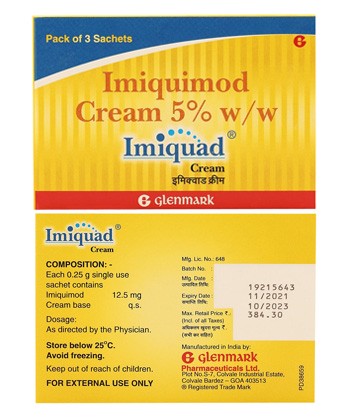
Aldara
- In our pharmacy, you can buy Aldara without a prescription, with delivery in 5–14 days throughout Australia. Discreet and anonymous packaging.
- Aldara (imiquimod) is used to treat external genital and perianal warts, actinic keratosis, and some superficial basal cell carcinomas. It works as a topical immune response modifier, helping your body’s immune system attack abnormal skin cells and virus-infected tissue.
- The usual dose depends on the condition: for actinic keratosis, apply 2 times a week; for superficial basal cell carcinoma, 5 times a week; and for external genital/perianal warts, 3 times a week. A thin layer is applied and left on for the prescribed time before washing off.
- The form of administration is a topical cream, usually 5% imiquimod in single-use sachets.
- It may begin working after the first few applications, but visible improvement usually takes several weeks, depending on the condition being treated.
- The duration of action is limited to each application period, but the full treatment course commonly lasts from 6 to 16 weeks depending on the indication.
- Alcohol does not have a direct known interaction with Aldara, but heavy drinking may make skin irritation or overall discomfort harder to tolerate. If you feel unwell, it is best to avoid alcohol during treatment.
- The most common side effects are local skin reactions such as redness, itching, burning, dryness, irritation, and tenderness at the application site.
- Would you like to try Aldara without a prescription?
Basic Aldara Information
- INN (International Nonproprietary Name): Imiquimod
- Brand names available in Australia: Aldara, Zyclara, and generic imiquimod, depending on supply and prescribing details
- ATC Code: D06BB10
- Forms & dosages: Cream 5% (Aldara), cream 3.75% (Zyclara), and cream 2.5% (Zyclara in some markets)
- Manufacturers in Australia: Local and global pharmaceutical companies supply imiquimod products; the original manufacturer was 3M Pharmaceuticals, now Meda, a Mylan/Viatris company
- Registration status in Australia: Prescription topical medicine, with use aligned to registered indications and local supply arrangements
- OTC / Rx classification: Prescription only (Rx) in most markets
- Standard dosages: Actinic keratosis 2 times weekly for about 8 hours, usually for 16 weeks; superficial basal cell carcinoma 5 times weekly for about 8 hours, usually for 6 weeks; external genital/perianal warts 3 times weekly for 6 to 10 hours, up to 16 weeks
- Storage: Store at room temperature between 15°C and 25°C, protect from heat, freezing, and light, and do not refrigerate
- Absolute contraindications: Hypersensitivity to imiquimod or excipients such as isostearic acid, cetyl alcohol, or parabens
- Common side effects: Local redness, irritation, itching, burning, dryness, pain, rash, swelling, oozing, crusting, erosion, ulceration, local lymphadenopathy, and rarely flu-like symptoms
- Relevant use cases: Aldara cream for genital warts, Aldara imiquimod for actinic keratosis, Aldara cream for skin cancer, and topical immunomodulator for selected superficial lesions
- Other useful information: Avoid application to broken skin and mucosal surfaces, and do not use in the eyes, nostrils, mouth, vagina, or rectum
Looking for a topical option that can be used at home, but still want something that is clinically sound?
That is where aldara often comes into the conversation.
In Australian practice, it is most often discussed for actinic keratosis, superficial basal cell carcinoma, and external genital or perianal warts.
For the right patient, it can be a practical alternative when surgery is less suitable, when lesions are superficial, or when access to procedural care is limited in regional and rural areas.
What Recent Studies Say About Aldara
Does aldara still have a place when there are procedural treatments available?
The short answer is yes, especially for small, superficial lesions and for patients who want a non-surgical option.
Recent dermatology literature from 2022 to 2025 continues to support imiquimod 5% cream for actinic keratosis, superficial basal cell carcinoma, and external genital or perianal warts.
Australian dermatology trials and international studies point to the same practical lesson.
Outcomes improve when the treatment is matched to lesion burden, site, and the patient’s ability to follow the full regimen.
When the cream is used correctly, local response rates are strongest in smaller and more superficial lesions.
That matters in the real world, because a cream used thinly, at the right frequency, and washed off at the right time is much more likely to work as intended.
Recurrence and incomplete clearance remain the main limitations compared with surgery or other procedural treatments.
That is why patients are usually advised not to judge the medicine too early if the skin becomes inflamed.
In practice, the visible reaction can be part of the treatment effect rather than a reason to abandon the course.
TGA post-market reporting also fits that pattern.
The most common real-world problem is local skin inflammation, not systemic toxicity.
That is one reason single-use 250 mg sachets are so useful.
They support dosing accuracy, reduce contamination risk, and make it easier for patients to stick to the plan.
People often ask whether a “better” result means the skin should be smooth by week one.
Usually not.
With actinic keratosis treatment and genital warts cream use, the medicine works through a local immune response, so the skin often looks worse before it looks better.
That is frustrating, but it is also expected.
How Aldara Works In The Skin
Wondering why aldara causes redness and soreness instead of acting like a simple antibiotic?
That is because it is not an antibiotic or a steroid.
Aldara is the brand name for imiquimod, a topical immune activator.
Patients often understand it best as a medicine that helps the skin’s immune system notice abnormal cells or virus-infected tissue.
In plain language, it tells the body to pay attention at the treatment site.
Scientifically, imiquimod is classified as ATC code D06BB10.
It stimulates local cytokine release, including interferon-related pathways, and promotes an immune response where it is applied.
That mechanism explains why it can be used in warts, actinic keratosis, and superficial basal cell carcinoma.
Because absorption is usually low, the effect is mostly local.
Even so, extensive application can increase irritation risk, so it should still be used exactly as prescribed.
That also explains why patients sometimes feel burning, see redness, or notice crusting during treatment.
Those changes are usually linked to the medicine doing its job at the skin level.
What It Is Approved For In Australia
What can aldara actually be used for here?
In Australia, it is generally a prescription-only topical medicine and its use is shaped by TGA registration and supply arrangements.
The common approved uses mirror global labels: actinic keratosis, superficial basal cell carcinoma, and external genital or perianal warts.
In specialist dermatology practice, imiquimod may also be considered for selected lesions where surgery is not practical.
That off-label flexibility is useful, but it should stay specialist-led because irritation and misuse are common.
It is also worth being clear that aldara is not a general rash cream.
It should not be used on mucosal surfaces, and it is not meant for the eyes, nostrils, mouth, vagina, or rectum.
For patients who are trying to work out whether a script is PBS-eligible or private, the indication matters.
Australian pharmacy counselling usually starts there, because the same active ingredient can sit under different dispensing rules.
In our online pharmacy, aldara is available without a prescription, with discreet delivery to Australia in 5-14 days.
That can be helpful for people who need a convenient way to access treatment, particularly if they live outside a major city.
How To Use The Cream Correctly
Is the dosing schedule confusing at first glance?
It can be, but once the pattern is clear, it is manageable.
For actinic keratosis, the usual schedule is twice weekly, left on for about eight hours, generally for up to 16 weeks.
For superficial basal cell carcinoma, it is usually five times weekly, also left on for about eight hours, generally for six weeks.
For external genital or perianal warts, it is usually three times weekly, left on for six to ten hours, for up to 16 weeks.
The main rule is simple.
Apply a thin layer only to the affected area and rub it in fully.
Then wash it off after the prescribed interval.
Single-use sachets are standard for aldara 5% cream, and each sachet should be used once only.
That is one of the reasons many patients prefer imiquimod cream over tube-based products.
If a dose is missed, it can usually be applied later the same day if appropriate.
If that is not possible, the dose is skipped rather than doubled.
Overapplication does not improve results.
It mainly raises the chance of a local reaction.
Older adults do not usually need a formal dose adjustment.
For children, the approved use is narrower and data are limited in younger age groups, so caution is important.
No routine dose adjustment is listed for liver or kidney impairment, but extra care makes sense if large areas are being treated.
A quick example helps.
A patient using genital wart treatment cream on Monday, Wednesday, and Friday night should apply it thinly, leave it on for the prescribed time, and wash it off in the morning if that fits the schedule.
That consistency matters more than trying to “make up” for missed applications.
Safety And Side Effects To Expect
Will the skin get red?
Usually yes, and that is one of the most common reasons people ring the pharmacy mid-course.
The common reactions include redness, itching, burning, dryness, pain, and rash at the site.
More intense reactions can include swelling, oozing, scabbing, flaking, crusting, erosion, and ulceration.
Local lymphadenopathy can also occur, and flu-like symptoms are recognised but uncommon.
That sounds unsettling, but counselling helps a lot.
Patients do better when they know in advance that visible inflammation is expected and does not always mean the treatment has failed.
The important safety point is to watch for severity and progression.
Severe skin breakdown, marked swelling, or symptoms that are difficult to tolerate should prompt a call to the prescriber or pharmacist.
Aldara should not be used if there is hypersensitivity to imiquimod or any excipient such as isostearic acid, cetyl alcohol, or parabens.
It should also be used carefully in autoimmune disease, immunosuppression, significant inflammatory skin disease at the treatment site, or extensive open or ulcerated lesions.
Those situations can increase the risk of irritation or absorption.
Broken skin and mucosal surfaces should be avoided unless a clinician specifically advises otherwise.
People sometimes worry about systemic toxicity.
That is not the usual issue here because absorption is minimal in most cases.
The main pharmacovigilance theme is local skin irritation rather than whole-body toxicity.
If symptoms suggest an overdose or overuse, the cream should be washed off and supportive management given.
Interactions And Practical Cautions
Are there food or alcohol restrictions with aldara?
Not in the usual sense, because this is a topical medicine.
There are no major food interactions, and alcohol, coffee, or diet are not known to change efficacy directly.
That means counselling in Australia focuses more on skin care than on meal timing.
The main interaction risk is additive irritation.
Other topical products on the same area can make the skin more reactive, especially exfoliants, retinoids, and harsh cleansers.
It is also sensible to check with a pharmacist before combining it with other wart or actinic keratosis treatments.
People who use multiple active skincare products often underestimate how much the skin barrier can be irritated.
That is where a simple plan is better than a complicated one.
Wait for clear advice before layering treatments on the same site.
For pharmacy counselling, the message is straightforward.
Classic systemic drug interactions are not the main concern here.
Local irritation is the issue to manage.
What Australian Patients Usually Ask
“How bad will the reaction be?”
“How long until it works?”
“Can I keep working during treatment?”
Those are the questions that come up most often at the counter and in telehealth follow-up.
Australian patients usually value aldara because it can avoid a procedure, but the treatment burden is real.
Redness, soreness, and visible inflammation can be hard to live with, especially if the lesion is in a sensitive area.
Many people are also price-conscious, particularly if the script is private rather than subsidised.
Pharmacists often spend time explaining what is expected, how to store the sachets, and when to wash the cream off.
That counselling makes a big difference to adherence.
Rural patients often rely on telehealth scripts and local pharmacies, while city patients may have easier access to larger banners such as Chemist Warehouse, Priceline, and TerryWhite.
Access can shape the whole treatment experience.
When stock is limited in a small branch, single-use sachets may need to be ordered in.
That is normal, but it can affect timing.
People also ask whether they should stop as soon as the skin becomes red.
Usually not, unless the reaction is severe or the prescriber changes the plan.
Pricing And Supply In Australia
How easy is it to get hold of aldara locally?
Supply can vary by banner and by branch.
Major Australian pharmacy chains may stock it or be able to order it in, while smaller rural outlets sometimes need extra time.
Single-use sachets are common, and that packaging can influence how products are dispensed and stored.
Telehealth prescribing has improved access for patients outside metropolitan centres.
That matters when people need a prescription topical cream but cannot easily see a specialist in person.
Online pharmacies can add convenience, but the source still needs to be legitimate Australian supply and the prescription requirements need to be followed.
For many patients, the key question is whether the item is PBS-subsidised or a private cost.
Pricing varies by brand, pack size, and dispensing format.
Australians often compare options because out-of-pocket costs matter, especially for treatments that take weeks to complete.
Generics may be available, and the active ingredient remains imiquimod regardless of the label.
That can help patients and pharmacists talk clearly about what is being supplied and why.
How Aldara Compares With Other Options
Is aldara the only option for these conditions?
Definitely not.
For genital warts, alternatives include podofilox, sinecatechins, and cryotherapy.
For actinic keratosis, common alternatives include 5-fluorouracil creams, diclofenac gel, Solaraze, and photodynamic therapy.
For superficial basal cell carcinoma, surgical excision, curettage, and Mohs surgery may be more appropriate, especially where topical treatment is contraindicated or not suitable.
The strengths of aldara are clear.
It is non-surgical, self-applied, and useful for selected superficial lesions.
That makes it attractive for patients who want to manage treatment at home.
The limitations are just as important.
Local irritation is common, the course can be long, and it is less suitable for extensive or deep disease.
Patients often ask whether a quicker option exists.
Sometimes the answer is yes, especially with a procedure.
Sometimes the answer is that the topical route fits the lesion and the patient better.
What The Rules Say About It
Is this medicine tightly regulated?
Yes, and that is appropriate for a prescription topical immunomodulator.
In Australia, aldara sits within prescription scheduling and local registration requirements.
Its use aligns with international approval for actinic keratosis, superficial basal cell carcinoma, and external genital or perianal warts.
Other national authorities also recognise it under brand and generic names.
The local branding may differ, but the active ingredient stays the same.
PBS access depends on the indication and prescribing rules.
That is why patients often ask the pharmacist whether the script is PBS-eligible or private.
Labels may differ across suppliers, but the medicine remains imiquimod.
For patients comparing brand names, that detail is worth knowing.
It helps avoid confusion when the box looks different from what they expected.
Common Questions About Aldara
Can it be used on the face?
Only if it has been prescribed for a suitable facial lesion and a clinician has directed it.
Why is the skin getting red?
A local reaction is expected and often reflects treatment activity.
Can treatment be stopped if it burns?
If the reaction is severe, the prescriber or pharmacist should be contacted rather than guessing the next dose.
Is it available over the counter?
Usually no, because aldara is prescription only in most markets.
Can it be used on broken skin?
That is generally avoided because it may increase absorption and irritation.
How is it best stored at home?
Keep it at room temperature, away from heat, freezing, and light, and do not refrigerate it.
Is one sachet enough for one treatment?
Single-use sachets are designed to support accurate dosing and reduce contamination risk, so the answer is usually yes for the prescribed application area.
Visual Guide To Access And Use
A useful visual for patients would show how aldara moves from prescription to pharmacy supply to home use.
It should also show the difference between PBS and private purchase pathways, because that is often where the confusion starts.
Another helpful graphic is a simple dosing calendar that maps out the weekly schedule for each condition.
For patients comparing stock or supply channels, it can also help to show major Australian pharmacy banners and regional access points.
That kind of visual makes a sachet-based product much easier to understand, especially when the treatment runs for weeks rather than days.
| City | Region | Delivery time |
|---|---|---|
| Sydney | New South Wales | 5-7 days |
| Melbourne | Victoria | 5-7 days |
| Brisbane | Queensland | 5-7 days |
| Perth | Western Australia | 5-7 days |
| Adelaide | South Australia | 5-7 days |
| Canberra | Australian Capital Territory | 5-7 days |
| Hobart | Tasmania | 5-7 days |
| Darwin | Northern Territory | 5-7 days |
| Gold Coast | Queensland | 5-7 days |
| Newcastle | New South Wales | 5-9 days |
| Wollongong | New South Wales | 5-9 days |
| Townsville | Queensland | 5-9 days |
| Cairns | Queensland | 5-9 days |
| Geelong | Victoria | 5-9 days |
Storage And Transport Tips For Australian Homes
Does Australian weather make storage more complicated?
It can, especially in summer.
Aldara should be stored at room temperature between 15°C and 25°C.
It should be protected from heat, freezing, and light, and it should not be refrigerated.
Sachets should be kept sealed until use and out of reach of children.
The good news for pharmacies is that this product does not need a cold chain.
That simplifies dispensing and transport.
Even so, rural and remote patients still need sensible advice.
Leaving the medicine in a hot car, a mailbox, or an outdoor parcel area is not ideal.
Simple handling advice can prevent avoidable spoilage and help the cream work as intended.
How To Use It Well
What separates good outcomes from disappointing ones?
Usually the small details.
Use a thin layer only.
Stick to the prescribed frequency.
Wash the cream off after the required time.
Do not apply it to the eyes, nostrils, mouth, vagina, or rectum.
Do not use it on broken skin unless a clinician has clearly advised it.
Complete the full course unless the prescriber changes the plan.
Those points may sound basic, but they are exactly where treatment goes off track in real life.
Single-use sachets also help because they reduce contamination risk and make dosing more accurate.
That is particularly useful for patients who are nervous about applying a prescription cream at home.
For best results, pharmacist counselling should be clear, calm, and specific.
When patients know what to expect, they are much less likely to stop too early because of normal inflammation.