
Minoxidil
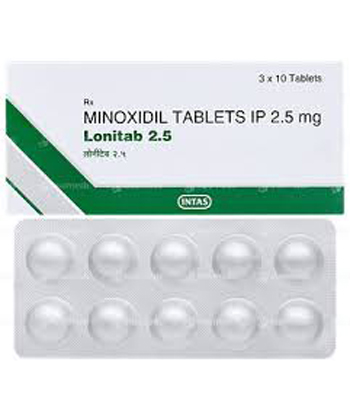
Minoxidil
- In Australia, minoxidil can usually be purchased without a prescription as an over-the-counter pharmacy medicine for topical hair loss treatment, while oral minoxidil is prescription only. It may also be available from online pharmacies and retail stores, depending on the product and state regulations.
- Minoxidil is used to treat androgenetic alopecia (pattern hair loss) and, in oral form, severe hypertension. It works by widening blood vessels and, when applied to the scalp, helps prolong the hair growth phase and improve hair density.
- The usual dose for hair loss is topical minoxidil 1 mL of 2% or 5% solution applied to the scalp once or twice daily, or foam as directed on the pack. Oral minoxidil doses for hypertension are typically 2.5–10 mg, but this is only used under medical supervision.
- The form of administration is topical solution, foam, lotion, gel, or oral tablet.
- Minoxidil usually starts to work after about 2 to 4 months of regular use for hair regrowth, although some people may notice early shedding before improvement.
- The effect lasts only while treatment is continued; ongoing daily use is needed to maintain results.
- Alcohol is not specifically contraindicated with topical minoxidil, but excess alcohol may worsen dizziness or low blood pressure, especially with oral minoxidil. Avoid drinking heavily if you are using the oral form.
- The most common side effects are scalp irritation, itching, dryness or flaking, and temporary increased hair shedding at the start of treatment. Oral use may also cause dizziness, fast heart rate, swelling, or low blood pressure.
- Would you like to try minoxidil without a prescription?

Minoxidil At A Glance
- INN (International Nonproprietary Name): Minoxidil
- Brand names available in Australia: Regaine, Rogaine, and generic minoxidil products may be available through pharmacies and online pharmacies; exact local stock varies.
- ATC Code: D11AX01
- Forms & dosages: Topical solution or foam in 2%, 3%, 5% and 7.5%; oral tablets in 2.5 mg, 5 mg and 10 mg strengths; topical gel or lotion in some markets.
- Manufacturers in Australia: Local availability may include imported and generic products from global suppliers; exact Australian manufacturer details are not specified.
- Registration status in Australia: Topical minoxidil is available in Australia for hair loss; oral minoxidil is prescription-only and generally used for hypertension or specialist off-label care.
- OTC / Rx classification: Topical minoxidil is commonly pharmacy-accessible; oral minoxidil is Rx only.
What The Latest Studies Say About Minoxidil
Thinking about starting a hair regrowth treatment, but unsure whether minoxidil is still worth it in 2025?
Recent reviews from 2022 to 2025 continue to place minoxidil among the first-line options for androgenetic alopecia, especially topical 5% solution and foam.
That lines up with day-to-day Australian pharmacy practice, where Regaine or a generic minoxidil topical product is often the first product suggested before a doctor review if results are poor.
Across international studies, many users get better hair density and satisfaction with once-daily foam or solution, but the biggest challenge is still adherence.
If treatment is stopped, gains generally fade, and early shedding can happen before regrowth becomes visible, which is why the first few months can feel discouraging.
Most people who respond well notice change over 4 to 12 months, with early improvement often starting around 2 to 4 months.
Australian safety reporting and product information consistently flag local irritation, dryness and unwanted facial or body hair growth as the most common problems.
Oral minoxidil is attracting interest in specialist dermatology, but it remains prescription-led because of systemic risks such as dizziness, swelling and low blood pressure.
For most Australians, the practical message is simple: topical minoxidil remains the benchmark, and the best results come from using it correctly and continuously.
How Minoxidil Works
Ever wondered how a liquid or foam can actually help thin hair come back?
Minoxidil helps wake up resting hair follicles and extend the growth phase, which is why it is used as a hair regrowth treatment rather than a hormone blocker.
It does not directly block androgens, so some patients use it alongside anti-androgen medicines when a doctor feels that combination makes sense.
On the scientific side, topical minoxidil is converted in the scalp to its active form, which is thought to open potassium channels and improve follicular signalling.
That action may improve blood flow signalling around the follicle and push more hairs into the anagen phase, which is the active growth stage.
Oral minoxidil has a different history.
It was originally developed for severe hypertension, and only later adapted off-label in low doses for hair loss.
Uses And Access In Australia
Are you trying to work out whether minoxidil Australia products are something you can simply buy, or whether you need a script?
Topical minoxidil is widely used in Australia for androgenetic alopecia and is commonly bought over the counter or through pharmacy channels.
Internationally, product information shows it is registered as a topical solution or foam for hair loss in many markets, including Australia.
Common brand families include Regaine, Rogaine, Kirkland and local generics, with many packs available in men’s and women’s versions.
Low-dose oral minoxidil is increasingly discussed in specialist clinics for hair loss, but it remains off-label and prescription-only.
Australian dermatologists and GPs may consider it when topical treatment is not tolerated or has not worked well enough.
Because hair loss treatment is usually private, not PBS-subsidised, many people focus on price and pharmacy access rather than long specialist waiting times.
In our online pharmacy, minoxidil is available without a prescription, with discreet delivery to Australia in 5-14 days.
Dosage And Routine
Not sure whether 1 mL once a day is enough, or whether the bottle should be used morning and night?
Product data show topical solution and foam strengths of 2%, 3%, 5% and 7.5%.
The usual regimen is 1 mL applied to the scalp, once or twice daily depending on the product, sex and tolerability.
For men, topical 5% solution or foam is commonly used twice daily for androgenetic alopecia.
For women, 2% is the traditional strength, although 5% may be used in some cases with clinician guidance.
Oral tablets are usually 2.5 mg, 5 mg or 10 mg, but they are intended for hypertension or specialist off-label use rather than routine hair loss self-treatment.
Results often begin in 2 to 4 months, while the strongest effect is usually seen by around 12 months.
If a dose is missed, the next dose should be taken when remembered, unless it is almost time for the next one.
Do not double the dose.
Safety, Contraindications And Side Effects
Worried about scalp irritation, or heard stories about shedding and wanted to check the facts first?
Minoxidil should be avoided if there is hypersensitivity to minoxidil or excipients.
For topical use, scalp dermatoses such as psoriasis or severe eczema are important concerns because irritation may worsen.
Oral minoxidil is contraindicated in severe heart disease and pheochromocytoma.
Local adverse effects include irritation, itching, dryness, flaking and initial shedding, which can happen before regrowth becomes obvious.
Some people also notice unwanted hair growth on the face or body, particularly if product spreads beyond the scalp.
Systemic side effects are more likely with oral use and can include increased heart rate, dizziness, swelling in the hands or feet, weight gain and hypotension.
Australian clinicians and the TGA safety lens place extra emphasis on monitoring when oral minoxidil is used, especially in people with cardiovascular history, renal issues, pregnancy, or older age.
Interactions And Practical Precautions
Is there anything you need to avoid with minoxidil, or can it be used alongside the rest of your routine?
There is no major food interaction established for topical minoxidil.
For oral minoxidil, alcohol can make dizziness or blood pressure effects worse, so caution is sensible.
Coffee may aggravate palpitations in people who are sensitive, particularly if any systemic absorption occurs.
Oral use also needs caution with other blood-pressure-lowering medicines.
Australians taking antihypertensives, diuretics or heart medicines should check with a pharmacist before starting.
That is especially important if more than one medicine is being used for blood pressure or fluid balance.
What Australian Patients Usually Experience
When do people usually start minoxidil?
Most shoppers notice widening part lines, temple recession or thinning at the crown before they begin looking for a solution.
Price sensitivity is strong, so it is common to compare Chemist Warehouse, Priceline and TerryWhite prices before choosing a pack.
Adherence often drops when early results do not appear or when users dislike a greasy feel.
Foam is often chosen for convenience, while solution may be cheaper and easier to source in some pharmacies.
Rural patients may lean more heavily on online pharmacies or telehealth scripts than city shoppers who can walk into a pharmacy after work.
Pharmacist counselling makes a real difference, because the way the product is explained often decides whether a person sticks with treatment long enough to see benefit.
Where It Is Sold And What It Costs
Looking for minoxidil price details before you commit to a long-term routine?
In Australia, minoxidil is commonly sold through major pharmacy chains, including Chemist Warehouse, Priceline and TerryWhite.
Globally, product information shows broad distribution through pharmacies, e-shops and hair clinics, which mirrors the Australian market well.
Online access has improved further with e-scripts and telehealth, especially for people outside metro areas.
Many customers compare generic minoxidil and branded Regaine 5% products online before ordering.
Because minoxidil for hair loss is generally a private purchase rather than a PBS subsidy item, generics matter for long-term affordability.
That is one reason many patients choose a minoxidil generic once they know the product suits their scalp and routine.
Regular use over months makes ongoing cost an important part of the decision, not just the first bottle price.
Alternatives Worth Discussing
What if minoxidil helps a little, but not enough?
The main alternatives include finasteride, dutasteride, spironolactone in women and other topical anti-androgens such as alfatradiol.
These options are usually prescription-based and may be considered when minoxidil response is incomplete.
For some people, a doctor may suggest a combination approach rather than swapping treatments immediately.
Minoxidil’s strengths are clear: OTC access, a broad evidence base and a strong first-line role in androgenetic alopecia.
Its limitations are just as clear: it works slowly, it must be used continuously and irritation can affect adherence.
Finasteride and related medicines may provide better hormone-targeted control, but they come with different risk profiles and prescribing rules.
Regulation In Australia And Overseas
Is minoxidil actually approved, or is it one of those products that sits in a grey area?
Minoxidil is widely registered internationally for topical use in androgenetic alopecia, including in the US, EU, UK and Australia.
The ATC code is D11AX01, which places it under dermatological preparations.
Topical minoxidil is usually pharmacy or OTC in many countries, including topical OTC use in Australia, while oral minoxidil stays Rx only.
That difference matters because oral minoxidil is primarily a hypertension medicine, and its use for hair loss is off-label.
PBS-style subsidy is not routine for cosmetic hair loss, so most Australians pay privately.
Brand families such as Rogaine, Regaine, Minoxidil Biorga, Minoxidil Cooper and local generics show how widely the ingredient has spread since patent expiry.
For the most current national status, Australians should still check pharmacy information and regulatory listings before buying.
Frequently Asked Questions
How long until minoxidil works?
Early change is usually seen in 2 to 4 months, with the best effect around 12 months.
Do you need to keep using it?
Yes, because hair gains usually fade after stopping.
Can women use 5% minoxidil?
Sometimes, but many start with 2% or use 5% only with clinician advice.
Is oral minoxidil safe?
It can be effective, but it needs medical supervision because systemic effects are possible.
What should you ask a pharmacist?
Texture, dosing, irritation management and brand differences are all sensible topics to cover.
For many people, Regaine for Men or a women’s version is easiest to start with because the instructions are straightforward and the packs are familiar.
Visual Ideas For Minoxidil Content
A clear visual can make a big difference when explaining hair loss treatment.
A side-by-side chart comparing 2% and 5% topical minoxidil works well for quick decision-making.
A timeline graphic showing shedding, early response and peak response helps set realistic expectations.
A pharmacy map can show where Australians commonly buy minoxidil solution or minoxidil foam.
Price comparison snapshots are also useful because private purchase is a major factor.
A flow chart for counselling can walk a shopper through product choice, correct application and side effect monitoring.
Storage And Travel Tips
Need to know whether the bottle can live in a bathroom cabinet or travel bag?
Minoxidil should be stored at 15 to 30°C, away from heat, moisture and light.
Bottles should stay tightly closed because topical solutions are flammable.
Foam packs are often sold in 60 g aerosol cans, while liquid is commonly in 60 mL bottles.
Travellers in hot Australian conditions should avoid leaving products in cars, where temperatures can rise quickly.
That matters even for short stops at the beach, the gym or the school pickup queue.
How To Use It Properly
Want the short version of minoxidil how to use advice from a pharmacist?
Australian pharmacists usually start with scalp condition, correct application, expected shedding and realistic timelines.
They also check for pregnancy, heart disease, dizziness history and other medicines before recommending a product.
Use exactly as directed, do not double doses, and seek advice if severe irritation or systemic symptoms appear.
Apply to a dry scalp, wash hands after use and avoid over-application.
Consistency matters more than using a bigger dose.
That is the point many people miss when they are desperate for faster hair regrowth.
Continuous use is essential for maintenance, and that should be made clear at the counter from the start.
Delivery Across Australia
| City | Region | Delivery Time |
|---|---|---|
| Sydney | New South Wales | 5-7 days |
| Melbourne | Victoria | 5-7 days |
| Brisbane | Queensland | 5-7 days |
| Perth | Western Australia | 5-7 days |
| Adelaide | South Australia | 5-7 days |
| Canberra | Australian Capital Territory | 5-7 days |
| Hobart | Tasmania | 5-7 days |
| Darwin | Northern Territory | 5-7 days |
| Newcastle | New South Wales | 5-9 days |
| Gold Coast | Queensland | 5-9 days |
| Sunshine Coast | Queensland | 5-9 days |
| Geelong | Victoria | 5-9 days |
| Wollongong | New South Wales | 5-9 days |
| Townsville | Queensland | 5-9 days |